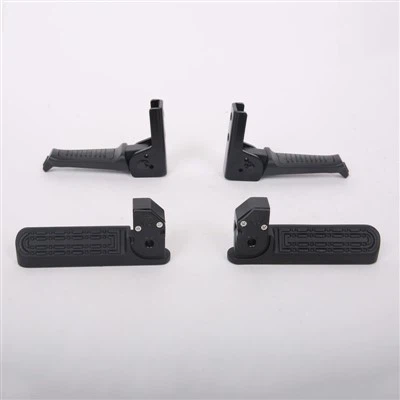
Motorcycle rear handrails, also known as rear grab handles, play a crucial role in enhancing the safety and comfort of motorcycle passengers. They provide a secure grip for passengers, allowing them to hold on tightly during rides, especially on bumpy roads or during sudden maneuvers. As a leading Motorcycle Rear Handrail supplier, I have in - depth knowledge about the various materials used in their manufacturing. In this blog, I will explore the common materials for motorcycle rear handrails, their properties, advantages, and disadvantages.
Aluminum
Aluminum is one of the most popular materials for motorcycle rear handrails. It is well - known for its lightweight nature, which has several benefits for motorcycles. A lighter handrail reduces the overall weight of the motorcycle, which can improve fuel efficiency and handling. For example, a motorcycle with lighter components can accelerate faster and turn more easily.
Aluminum also has excellent corrosion resistance. Motorcycles are often exposed to various environmental conditions, such as rain, humidity, and road salt. Aluminum forms a thin oxide layer on its surface when exposed to air, which protects it from rust and corrosion. This means that aluminum rear handrails can maintain their appearance and structural integrity over a long period, even in harsh environments.
In addition, aluminum is relatively easy to machine and shape. This allows for the production of rear handrails with complex designs and precise dimensions. Manufacturers can create handrails that not only function well but also enhance the aesthetic appeal of the motorcycle. Our Aluminum Rear Armrest products are made from high - quality aluminum, ensuring both durability and style.
However, aluminum has some drawbacks. Although it is strong, it may not be as strong as some other metals in high - stress situations. For instance, in a severe impact, an aluminum handrail may deform more easily compared to a steel one. Also, the cost of high - quality aluminum can be relatively high, which may increase the price of the final product.
Steel
Steel is another traditional material used for motorcycle rear handrails. It is renowned for its high strength and durability. Steel handrails can withstand significant forces without deforming, making them a reliable choice for heavy - duty motorcycles or for riders who frequently carry passengers.
Steel is also relatively inexpensive compared to some other materials, especially when considering its strength - to - cost ratio. This makes it an attractive option for budget - conscious motorcycle manufacturers and consumers.
One of the main disadvantages of steel is its weight. Steel is much heavier than aluminum, which can have a negative impact on the motorcycle's performance. The additional weight can reduce fuel efficiency and make the motorcycle more difficult to handle, especially during high - speed maneuvers or when parking.
Another issue with steel is its susceptibility to corrosion. If not properly treated or coated, steel handrails can rust over time, which not only affects their appearance but also weakens their structural integrity. To combat this, steel handrails are often coated with paint, powder - coating, or other anti - rust treatments.
Stainless Steel
Stainless steel is a type of steel alloy that contains chromium, which gives it excellent corrosion resistance. It combines the strength of steel with the anti - rust properties of materials like aluminum. Stainless steel rear handrails are ideal for motorcycles that are frequently used in wet or coastal environments, as they can resist the corrosive effects of saltwater and moisture.
Stainless steel also has a sleek and modern appearance, which can enhance the look of the motorcycle. It is available in different finishes, such as brushed or polished, allowing for customization to match the motorcycle's style.
However, stainless steel is more expensive than regular steel. The cost of producing stainless steel components is higher due to the additional alloying elements and the more complex manufacturing processes. Also, like regular steel, stainless steel is relatively heavy, which can still pose some challenges for motorcycle performance.
Plastic
Plastic is a lightweight and cost - effective material that is sometimes used for motorcycle rear handrails. It is easy to mold into various shapes, which allows for a wide range of design possibilities. Plastic handrails can be made to look like more expensive materials, such as aluminum or carbon fiber, at a fraction of the cost.
Plastic is also resistant to corrosion and can withstand a certain amount of impact without cracking. It is often used in combination with other materials, such as a plastic coating over a metal frame, to provide both protection and a comfortable grip.
The main limitation of plastic is its relatively low strength compared to metals. Plastic handrails may not be suitable for heavy - duty applications or for riders who require a high - level of durability. In extreme conditions, plastic can also become brittle and crack, especially in cold weather.
Carbon Fiber
Carbon fiber is a high - performance material that is increasingly being used in the motorcycle industry, including for rear handrails. It is extremely lightweight, even lighter than aluminum, which can significantly improve the motorcycle's performance. The reduced weight allows for better acceleration, braking, and handling.
Carbon fiber also has high strength - to - weight ratio. It can withstand large amounts of stress while remaining relatively light. This makes it an excellent choice for high - end motorcycles or for riders who demand the best in terms of performance.
The appearance of carbon fiber is also very appealing. It has a unique, high - tech look that can give the motorcycle a premium and sporty appearance.
However, carbon fiber is one of the most expensive materials used in motorcycle manufacturing. The production process is complex and time - consuming, which drives up the cost. This makes carbon fiber rear handrails a luxury item that is often only found on high - end or custom motorcycles.
As a Motorcycle Rear Handrail supplier, we offer a wide range of rear handrails made from different materials to meet the diverse needs of our customers. Whether you are looking for a lightweight and stylish aluminum handrail, a durable steel one, or a high - performance carbon fiber option, we have the right product for you. Our Motorcycle Rear Grab Handle and Motorcycle Rear Handrail products are designed and manufactured to the highest standards, ensuring both quality and performance.
If you are interested in purchasing motorcycle rear handrails or have any questions about our products, please feel free to contact us. We are happy to discuss your specific requirements and provide you with the best solutions for your motorcycle.


References
- "Motorcycle Design and Technology" - A comprehensive book on motorcycle components and materials.
- Industry reports on motorcycle parts manufacturing and materials trends.