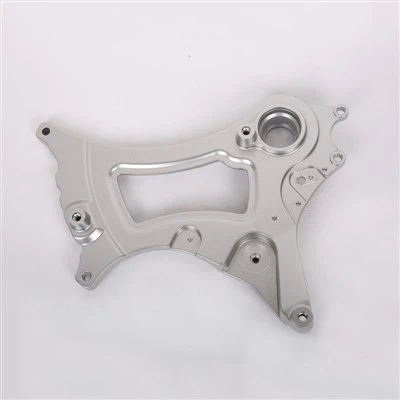
In the realm of electric scooters, the swing arm plays a pivotal role in ensuring a smooth and stable ride. As a trusted Electric Scooter Swing Arm supplier, I've witnessed firsthand the diverse challenges these components face, especially when it comes to high - temperature environments. This blog aims to explore whether the electric scooter swing arm can withstand such harsh conditions.
The Importance of the Electric Scooter Swing Arm
Before delving into the high - temperature resistance, it's crucial to understand the significance of the electric scooter swing arm. The swing arm, also known as the rear fork, is a key structural component that connects the rear wheel to the scooter's frame. It provides support for the rear wheel, absorbs shocks from the road surface, and helps maintain the alignment of the wheel. A well - designed swing arm can enhance the overall stability, handling, and comfort of the electric scooter. You can learn more about the Electric Scooter Rear Fork on our website.
Material Composition of Electric Scooter Swing Arms
Most electric scooter swing arms are made from high - strength materials such as aluminium alloy. Aluminium alloy is a popular choice due to its excellent combination of strength, light weight, and corrosion resistance. Our Electric Scooter Swing Arm is crafted from high - quality aluminium alloy, which offers a good balance between durability and performance. Additionally, some swing arms may incorporate other materials or undergo special treatments to further enhance their properties. For example, the Aluminium Alloy Flat Fork is designed with a unique flat shape, which not only provides sufficient strength but also reduces the weight of the scooter.
Effects of High - Temperature Environments on Swing Arms
High - temperature environments can have several detrimental effects on electric scooter swing arms. One of the primary concerns is thermal expansion. As the temperature rises, the materials in the swing arm expand. If the expansion is not properly accounted for in the design, it can lead to increased stress on the swing arm, potentially causing deformation or even failure.
Another issue is the impact on the mechanical properties of the material. High temperatures can cause a reduction in the strength and hardness of the aluminium alloy. This means that the swing arm may be more prone to bending or cracking under normal operating loads. For instance, in extremely hot climates, where temperatures can soar above 40°C (104°F), the material's yield strength may decrease, making it less able to withstand the forces exerted during acceleration, braking, and turning.
Furthermore, high - temperature environments can also accelerate the corrosion process. Although aluminium alloy has good corrosion resistance, prolonged exposure to high temperatures and humidity can lead to the formation of oxide layers on the surface of the swing arm. These oxide layers can weaken the material over time and compromise the integrity of the swing arm.
Testing and Evaluation of Swing Arms in High - Temperature Conditions
To ensure that our electric scooter swing arms can withstand high - temperature environments, we conduct a series of rigorous tests. One of the key tests is the thermal cycling test. In this test, the swing arm is subjected to repeated cycles of high and low temperatures to simulate real - world conditions. We measure the dimensional changes, mechanical properties, and any signs of damage after each cycle.


We also perform high - temperature endurance tests, where the swing arm is placed in a controlled high - temperature environment for an extended period. During this test, we monitor the stress distribution, deformation, and any changes in the material's microstructure. These tests allow us to identify potential weaknesses in the design and make necessary improvements to enhance the high - temperature resistance of our swing arms.
Design Considerations for High - Temperature Resistance
In addition to material selection and testing, proper design is essential for ensuring the swing arm's ability to withstand high - temperature environments. We incorporate features such as expansion joints and stress - relief grooves in our swing arm designs. Expansion joints allow the swing arm to expand and contract freely without causing excessive stress, while stress - relief grooves help to distribute the stress more evenly across the component.
Moreover, we optimize the cross - sectional shape of the swing arm to improve its structural integrity. A well - designed cross - section can enhance the strength - to - weight ratio and reduce the risk of deformation under high - temperature conditions. We also pay close attention to the surface finish of the swing arm. A smooth and protective surface finish can help prevent corrosion and reduce the impact of high temperatures on the material.
Real - World Performance and User Experiences
In real - world scenarios, our electric scooter swing arms have demonstrated good performance in high - temperature environments. We have received feedback from customers in hot climates, such as the Middle East and Southeast Asia, who have reported that our swing arms have maintained their integrity and functionality even after long - term use in high - temperature conditions. However, it's important to note that proper maintenance and usage also play a crucial role in ensuring the longevity of the swing arm. For example, regular cleaning and inspection can help detect any early signs of damage and prevent further deterioration.
Conclusion and Call to Action
In conclusion, while high - temperature environments pose challenges to electric scooter swing arms, with the right material selection, design, and testing, it is possible for the swing arm to withstand such conditions. Our company, as a leading Electric Scooter Swing Arm supplier, is committed to providing high - quality products that can perform reliably in diverse environments.
If you are in the market for electric scooter swing arms or have any questions about our products' performance in high - temperature environments, we encourage you to contact us for further discussion. We are more than happy to provide you with detailed information and support to help you make the best choice for your electric scooter manufacturing needs. Let's work together to ensure the safety and performance of your electric scooters.
References
- ASM Handbook Committee. (2000). ASM Handbook Volume 2: Properties and Selection: Nonferrous Alloys and Special - Purpose Materials. ASM International.
- Dieter, G. E. (1988). Mechanical Metallurgy. McGraw - Hill.
- Schaffer, G. B., Wegst, U. G. K., & Ashby, M. F. (2016). Engineering Materials 1: An Introduction to Properties, Applications, and Design. Butterworth - Heinemann.