Simulation plays an indispensable role in die casting mould development, especially for a die casting mould supplier like us. In this blog, we will explore how simulation contributes to various aspects of die casting mould development and why it is a game - changer in the industry.
Understanding the Basics of Simulation in Die Casting
Simulation in die casting is a process that uses computer - based models to predict the behavior of molten metal during the die casting process. It takes into account factors such as fluid flow, heat transfer, solidification, and the resulting stress and deformation in the mould and the cast part. By simulating these complex phenomena, we can gain insights into the die casting process that would otherwise be difficult or impossible to obtain through trial - and - error methods.
Optimizing Mould Design
One of the primary roles of simulation in die casting mould development is optimizing the mould design. The design of a die casting mould is a critical factor that determines the quality of the final cast part. A poorly designed mould can lead to defects such as porosity, shrinkage, and incomplete filling.
Simulation allows us to test different mould designs virtually. For example, we can simulate the fluid flow of molten metal within the mould cavity. By analyzing the flow patterns, we can identify areas where the metal may not fill properly or where air may be trapped. Based on the simulation results, we can modify the gating and runner systems, which are responsible for guiding the molten metal into the mould cavity.
The gating system's design affects the velocity and direction of the molten metal flow. Through simulation, we can determine the optimal gate size, shape, and location to ensure a smooth and uniform filling of the mould cavity. This helps in reducing the formation of air pockets and improving the overall quality of the cast part.
In addition, simulation can also help us optimize the cooling system design in the mould. Heat transfer is a crucial aspect of the die casting process. An efficient cooling system helps in controlling the solidification rate of the molten metal, which in turn affects the mechanical properties of the cast part. By simulating the heat transfer process, we can determine the optimal location and size of cooling channels in the mould. This ensures that the molten metal solidifies evenly, reducing the chances of shrinkage and warpage in the final part.
Predicting and Avoiding Defects
Defects in die - cast parts can be costly as they require additional processing or, in some cases, scrapping of the parts. Simulation is a powerful tool for predicting and avoiding these defects.
For instance, porosity is a common defect in die casting, which can reduce the strength and durability of the cast part. By simulating the solidification process, we can predict where porosity may occur. Porosity is often caused by the entrapment of gas or the shrinkage of the metal during solidification. Simulation can help us understand the conditions that lead to porosity formation and enable us to take preventive measures. This could involve adjusting the pouring temperature, changing the injection speed, or modifying the mould design.
Shrinkage is another defect that can affect the dimensional accuracy of the cast part. During the solidification of the molten metal, it contracts. If the shrinkage is not properly controlled, it can result in voids and dimensional variations. Simulation allows us to analyze the shrinkage behavior and make adjustments to the mould design, such as adding feeders or modifying the part geometry, to compensate for the shrinkage.
Improving Process Efficiency
Simulation also plays a significant role in improving the overall efficiency of the die casting process. By simulating different process parameters, we can determine the optimal settings for factors such as injection pressure, injection speed, and pouring temperature.
For example, the injection pressure affects how well the molten metal fills the mould cavity. If the pressure is too low, the metal may not reach all areas of the cavity, leading to incomplete filling. On the other hand, if the pressure is too high, it can cause excessive wear on the mould and increase the risk of flash formation. Through simulation, we can find the optimal injection pressure that ensures complete filling without causing any negative effects.


Similarly, the injection speed impacts the flow behavior of the molten metal. A high injection speed can lead to turbulence, which may entrap air and cause defects. A low injection speed, however, may result in slow filling and premature solidification. Simulation helps us to identify the ideal injection speed that balances these factors.
Pouring temperature is another crucial parameter. If the pouring temperature is too low, the molten metal may solidify before it fills the mould cavity completely. If it is too high, it can cause thermal damage to the mould and increase the energy consumption. Simulation enables us to find the optimal pouring temperature for each specific die casting application.
Reducing Development Time and Cost
Traditional methods of die casting mould development rely heavily on trial - and - error. This can be a time - consuming and costly process, as multiple mould prototypes may need to be manufactured and tested. Simulation helps to significantly reduce the need for physical prototypes.
By simulating the die casting process, we can evaluate different design concepts and process parameters without the need to fabricate actual moulds. This allows us to make informed decisions early in the development process, reducing the number of design iterations. As a result, the overall development time is shortened, and the cost associated with prototype production and testing is reduced.
Real - World Applications
In our experience as a die casting mould supplier, simulation has proven to be invaluable in various applications. For example, in the production of Aluminum High - pressure Die Casting Mold, we use simulation to optimize the mould design for high - pressure applications. The high pressure in this process requires a precise control of the molten metal flow and solidification. Simulation helps us ensure that the mould can withstand the pressure and produce high - quality aluminum castings.
In the case of Aluminium Die Casting Mold, simulation is used to address the unique properties of aluminum, such as its high thermal conductivity. By simulating the heat transfer process, we can design the cooling system to effectively remove heat from the molten aluminum, ensuring uniform solidification and minimizing defects.
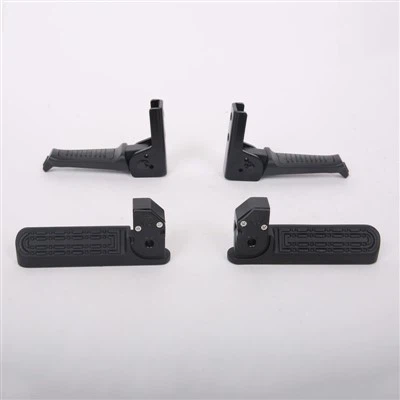
We also use simulation in the development of Motorcycle Parts Die Casting Mold. Motorcycle parts often have complex geometries, and simulation helps us to ensure that the molten metal can fill the complex mould cavities without any issues. This enables us to produce high - precision motorcycle parts with excellent mechanical properties.
Conclusion
In conclusion, simulation plays a vital role in die casting mould development. It offers numerous benefits, including optimizing mould design, predicting and avoiding defects, improving process efficiency, and reducing development time and cost. As a die casting mould supplier, we recognize the importance of simulation in delivering high - quality moulds and cast parts to our customers.
If you are in the market for die casting moulds, we invite you to contact us for procurement and further discussions. Our team of experts is ready to use the latest simulation technology to meet your specific requirements and provide you with the best solutions.
References
- Campbell, J. (2003). Casting. Butterworth - Heinemann.
- Flemings, M. C. (1974). Solidification Processing. McGraw - Hill.
- Dantzig, J. A., & Rappaz, M. (2009). Modeling of Casting, Welding and Advanced Solidification Processes XII. TMS.