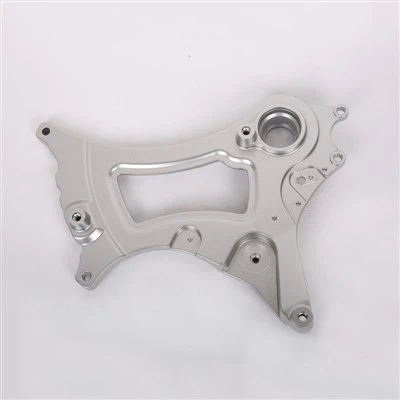
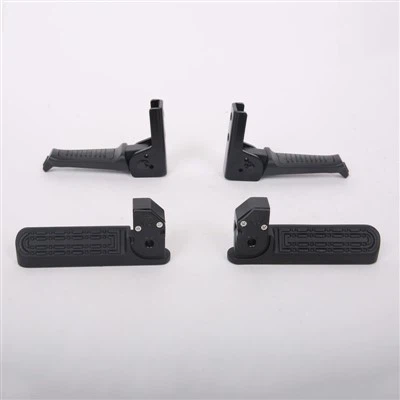
Hey there! As a die casting mould supplier, I've seen firsthand how crucial venting is in the die casting process. In this blog, I'm gonna break down why venting matters so much in a die casting mould and how it can make or break your production.
Let's start with the basics. Die casting is a manufacturing process where molten metal is forced into a mould cavity under high pressure. It's a super efficient way to produce complex parts with high precision and excellent surface finish. But here's the catch: if there's no proper venting in the die casting mould, you're gonna run into some serious problems.
One of the main reasons venting is so important is to get rid of air and gases. When the molten metal is injected into the mould, there's already air inside the cavity. If this air can't escape, it gets trapped, creating air pockets in the final product. These air pockets can lead to all sorts of defects, like porosity, shrinkage, and even cracks. Porosity, for example, weakens the structural integrity of the part, making it more likely to fail under stress. Shrinkage and cracks can also affect the dimensional accuracy of the part, which is a big no - no in most industries.
Another issue caused by poor venting is the formation of oxide films. When the air in the mould reacts with the molten metal, it can create oxide films on the surface of the part. These films not only look bad but can also interfere with the bonding of the metal, leading to poor adhesion in subsequent processes like plating or painting. This can add extra costs to your production as you may need to rework or scrap the defective parts.
Venting also plays a key role in ensuring a smooth flow of molten metal. A well - vented mould allows the metal to fill the cavity evenly and completely. Without proper venting, the metal may not be able to flow freely, resulting in incomplete filling of the mould. This can lead to parts with missing features or thin sections, which are again unacceptable in most applications.
Now, let's talk about the different types of venting systems used in die casting moulds. There are several methods, and the choice depends on the complexity of the part, the type of metal being used, and the specific requirements of the production process.
One common type is the open vent system. This involves creating small channels or grooves in the mould that allow the air and gases to escape to the outside. Open vents are relatively simple to design and manufacture, but they need to be carefully sized and placed to ensure effective venting without causing any problems with the flow of molten metal.
Another option is the porous plug vent system. Porous plugs are made of special materials that allow air and gases to pass through while preventing the molten metal from escaping. These plugs can be inserted into the mould at strategic locations to provide targeted venting. They're particularly useful in areas where it's difficult to create open vents, such as in deep cavities or around complex features.
As a die casting mould supplier, I often work with customers to design the most suitable venting system for their specific needs. We take into account factors like the part geometry, the metal alloy, and the production volume. For example, if you're using an Aluminum Alloy Die - casting Mold, the venting requirements may be different compared to an Aluminium Die Casting Mold. Aluminum alloys have different fluidity and reactivity, so the venting system needs to be optimized accordingly.
High - pressure die casting is another area where proper venting is extremely important. In High - pressure Die Casting Mold applications, the molten metal is injected at very high speeds and pressures. This means that the air and gases need to be removed quickly to prevent defects. A well - designed venting system can handle the high - speed flow of metal and ensure that the mould is filled properly.


In addition to preventing defects, good venting can also improve the overall efficiency of the die casting process. When the air and gases are removed smoothly, the cycle time can be reduced. This means you can produce more parts in less time, which is a huge advantage in today's competitive manufacturing environment. It also reduces the wear and tear on the mould, as there's less stress on the mould components due to trapped air and gases.
So, if you're in the market for a die casting mould, don't overlook the importance of venting. A well - vented mould can save you a lot of time, money, and headaches in the long run. Whether you're producing small, intricate parts or large, structural components, proper venting is essential for high - quality production.
If you're interested in learning more about how we can design a die casting mould with the perfect venting system for your specific needs, I'd love to have a chat. We have a team of experienced engineers who can work with you to understand your requirements and come up with the best solution. Whether it's a custom - designed mould or an off - the - shelf option, we've got you covered.
In conclusion, venting is not just a minor detail in the die casting mould design; it's a critical factor that can have a huge impact on the quality, efficiency, and cost of your production. So, make sure you choose a die casting mould supplier who understands the importance of venting and can deliver a mould that meets your expectations.
References
- Campbell, J. (2003). Castings. Butterworth - Heinemann.
- Groover, M. P. (2010). Fundamentals of Modern Manufacturing: Materials, Processes, and Systems. Wiley.
- Tharumarajah, A. (2007). Die Casting Handbook: A Practical Guide for Engineers and Manufacturers. McGraw - Hill.