Hey there! I'm a supplier of Pressure Die Casting Moulds, and I've been in this game for quite a while. One of the most common challenges we face in the pressure die casting process is ensuring the uniformity of temperature distribution in the mould. In this blog, I'm gonna share some tips and tricks on how to achieve that.
First off, let's understand why temperature uniformity is so important. When the temperature in a pressure die casting mould isn't evenly distributed, it can lead to a bunch of problems. For example, uneven cooling can cause the casting to have different levels of shrinkage in various parts. This may result in warping, cracking, or even dimensional inaccuracies in the final product. And we all know that in the manufacturing world, a faulty product means wasted time, money, and resources.
Design Considerations
The design of the pressure die casting mould plays a huge role in temperature distribution. When we're designing a mould, we need to think about how the molten metal will flow and how the heat will dissipate. One key aspect is the layout of the cooling channels. These channels are like the veins of the mould, carrying coolant to absorb and carry away the heat generated during the casting process.
We should design the cooling channels to cover all the critical areas of the mould. For instance, areas where the molten metal first enters the mould usually experience a higher temperature, so we need to make sure there are enough cooling channels in those spots. Also, the diameter and spacing of the cooling channels matter. If the channels are too small, the coolant flow may be restricted, and if they're too far apart, there may be areas with poor heat transfer.
Another design factor is the thickness of the mould walls. Thicker walls can hold more heat, which might lead to uneven temperature distribution. So, we need to find the right balance between having enough strength in the mould and ensuring efficient heat transfer.
Material Selection
The choice of materials for the pressure die casting mould is also crucial for temperature uniformity. Different materials have different thermal conductivities, which is a measure of how well they can transfer heat. We want to use materials with high thermal conductivity so that the heat can spread evenly throughout the mould.
For example, some alloys are known for their excellent thermal properties. These alloys can quickly transfer the heat from the hot areas of the mould to the cooler areas, helping to maintain a more uniform temperature. Additionally, the material should be able to withstand the high pressures and temperatures involved in the die casting process without deforming or cracking.
Coolant System
The coolant system is the heart of maintaining temperature uniformity in the pressure die casting mould. We need to choose the right coolant and ensure its proper circulation. Water is a commonly used coolant because it has a high specific heat capacity, which means it can absorb a lot of heat. However, we also need to be careful about corrosion and scaling in the cooling channels when using water.
To prevent these issues, we can add inhibitors to the water or use other types of coolants, such as oil-based coolants. The coolant flow rate is another important factor. A higher flow rate can increase the heat transfer efficiency, but we also need to make sure it doesn't cause excessive pressure drop in the cooling system.
We can use flow meters and pressure sensors to monitor the coolant flow and pressure. By adjusting the pump speed or the valve openings, we can control the coolant flow rate and ensure that it's consistent throughout the cooling channels.
Monitoring and Control
Continuous monitoring of the temperature in the pressure die casting mould is essential. We can use thermocouples or infrared sensors to measure the temperature at different points in the mould. These sensors can provide real-time data, which allows us to detect any temperature variations early on.
Based on the temperature data, we can make adjustments to the coolant system or the casting process. For example, if we notice that a particular area of the mould is running too hot, we can increase the coolant flow in that area or reduce the injection speed of the molten metal to decrease the heat input.


We can also use automation and control systems to make these adjustments more precisely. These systems can analyze the temperature data and automatically adjust the relevant parameters, such as the coolant flow rate, the heating or cooling time, and the injection pressure.
Preheating and Post - Cooling
Preheating the pressure die casting mould before the casting process can also contribute to better temperature uniformity. When the mould is preheated to an appropriate temperature, it can reduce the thermal shock when the molten metal is injected. This helps to prevent sudden temperature changes and ensures a more even temperature distribution during the initial stages of the casting.
After the casting is complete, proper post - cooling is necessary. Gradually cooling the mould can prevent rapid temperature changes that might cause internal stresses and uneven shrinkage. We can control the post - cooling rate by adjusting the coolant flow and the time it takes for the coolant to circulate.
Industry Applications
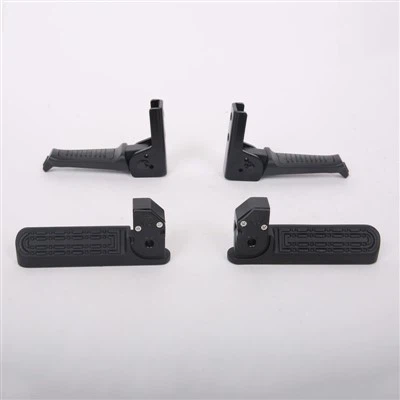
In the real world, achieving temperature uniformity in pressure die casting moulds is crucial for various industries. For example, in the Motorcycle Parts Die Casting Mold industry, the parts need to have high precision and quality. Uneven temperature distribution can lead to defects in the motorcycle parts, which can affect their performance and safety.
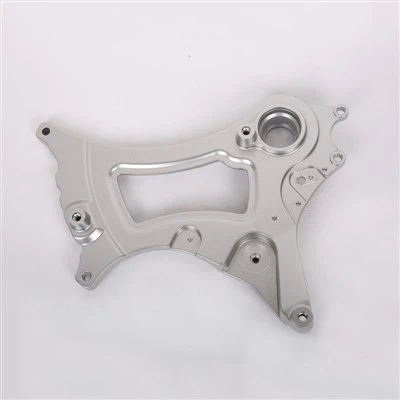
Similarly, the Aluminum Alloy Die-casting Mold industry relies on accurate temperature control. Aluminum alloys are widely used in many applications due to their lightweight and high strength properties. However, they are also sensitive to temperature variations during the casting process. Ensuring uniform temperature distribution in the mould can help produce high - quality aluminum alloy castings.
As a supplier of Pressure Die Casting Mould, we understand the importance of these factors in different industries. We're constantly working on improving our designs and processes to provide our customers with moulds that can achieve excellent temperature uniformity.
Conclusion
In conclusion, ensuring the uniformity of temperature distribution in a pressure die casting mould is a complex but achievable task. It involves careful design, proper material selection, an efficient coolant system, continuous monitoring, and appropriate preheating and post - cooling procedures.
By following these steps, we can reduce the defects in the castings, improve the quality of the final products, and increase the overall efficiency of the pressure die casting process. If you're in the market for high - quality pressure die casting moulds that can ensure excellent temperature uniformity, don't hesitate to reach out. We're here to help you with all your die casting needs and can provide you with customized solutions based on your specific requirements.
References
- Campbell, J. (2003). Castings. Butterworth - Heinemann.
- Dieter, G. E. (1988). Mechanical Metallurgy. McGraw - Hill.
- Flemings, M. C. (1974). Solidification Processing. McGraw - Hill.