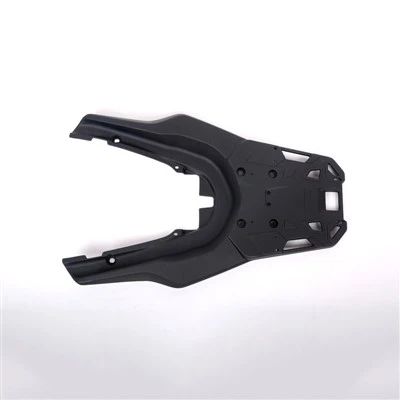
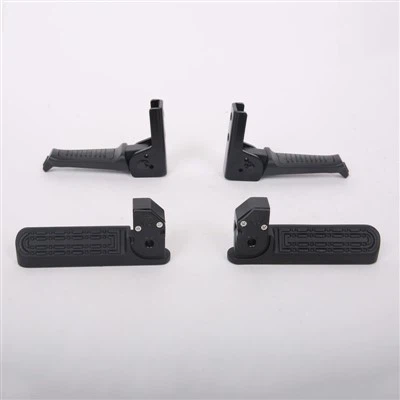
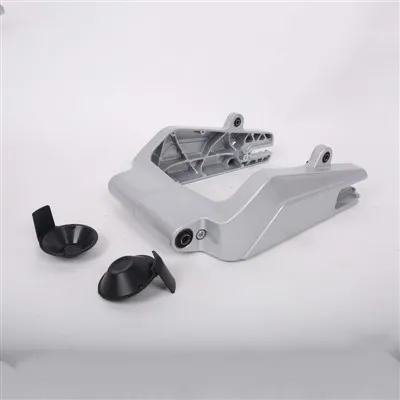
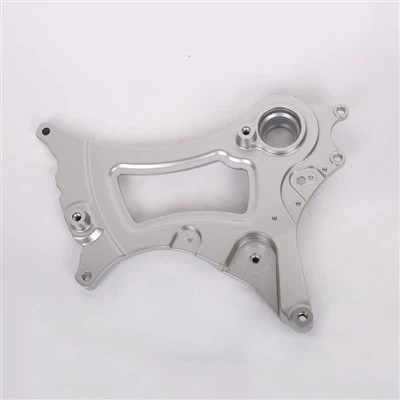
In order to fundamentally eliminate the occurrence of defective products and mass-produce die castings at low cost, the design of die castings must be suitable for die casting production. Good die casting design can ensure the life, output and production reliability of the mold. With a good yield rate, the design principles and requirements will be explained from the structure and process of die castings.
1. Avoid concave during design and minimize the number of side core pulling
2. Design of die casting wall thickness
The wall thickness of die castings is generally 2-5 mm. It is generally believed that wall thickness above 7mm is not good because its strength decreases with the increase of wall thickness. In addition, the design of wall thickness should try to follow the principle of equal wall thickness, mainly to prevent the shrinkage stress generated by local hot joints and the large difference of different thicknesses from causing internal pores, deformation, cracks and other defects.
3. Design of die casting fillet
Except for special matching requirements, all parts of the casting should be designed with fillets. The function of fillets is to avoid stress concentration and cracking, while extending the service life of the mold. In addition, when the parts have surface treatment requirements, the fillets can be evenly coated. Ground.
4. Design of die casting draft angle
The role of the draft angle is to make the product demold smoothly, reduce the tightening force of the parts, and avoid part strain. The minimum inclination angle of the die casting is shown in the following table. If allowed, the maximum inclination angle should be taken. , generally ranging from 1-3 degrees on one side.
5. Design of ejection position of die casting process
After the mold is opened during the die casting process, the product is wrapped on the moving mold and must be ejected by the ejector pin of the mold. Therefore, the product must have enough space for the ejector pin. The ejector pin diameter of the die casting product is generally above 5mm and below 5mm. It often breaks during the production process, so it is not recommended. When designing die casting products, consider whether there is enough ejection space and position. Try to avoid using special-shaped ejectors and use round ejectors. At the same time, pay attention to the position of the ejector pin and the wall. Adequate distance, generally greater than 3mm.
6. Design to reduce subsequent processing of die castings
Die castings can achieve high dimensional accuracy, so most surfaces and parts do not require machining and can be directly assembled and used. At the same time, machining is not supported due to the following two reasons. First, the surface of the casting is hard and wear-resistant, and it will fall off after processing. This cold hard layer, second, there are usually pores inside the die casting. Scattered small holes do not affect the use. After processing, the pores are exposed, affecting the appearance and use function. Even if there are special requirements for machining, it should be adopted. Reasonable control of machining allowances to reduce machining time and the chance of leaking pores. Generally, the machining allowance is controlled below 0.8. In order to minimize machining, it is necessary to reasonably formulate drawing tolerances to ensure the installation of parts. Inappropriate tolerance ranges will increase subsequent processing. Secondly, reasonable design reduces the shrinkage and deformation of parts. Third, butt-shaped holes can consider bevel mounting holes.
7. Embedded design in die casting design
Metal or non-metal inserts can be cast into die castings, mainly to improve local strength and wear resistance or to form a difficult-to-form inner cavity. The part where the insert is embedded in the metal should be designed to prevent rotation and prevent axial movement. Consider the convenience of insert insertion into the mold and the stability of withstanding the impact of molten metal.