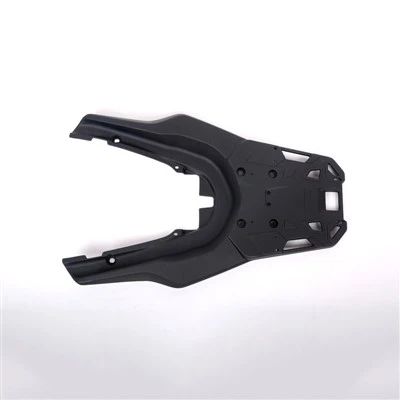
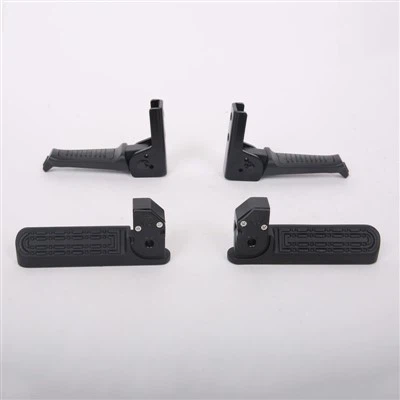
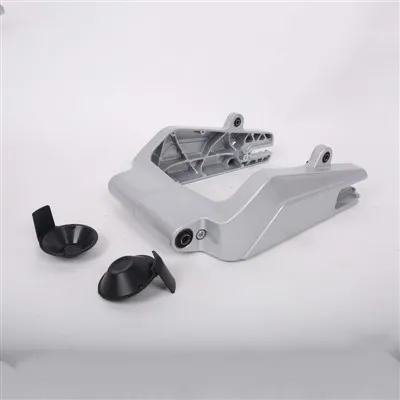
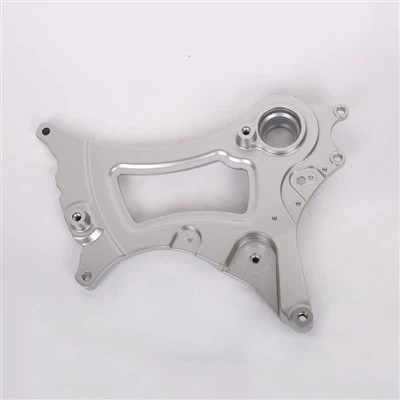
Die casting is a metal casting process characterized by applying high pressure to the molten metal using the inner cavity of the mold. The mold is usually made of a higher strength alloy, and the process is somewhat similar to injection molding. Most die castings are iron-free, such as zinc, copper, aluminum, magnesium, lead, tin, lead-tin alloys and their alloys. Depending on the type of die casting, a cold chamber die casting machine or a hot chamber die casting machine is required.
Stamping is a forming method that uses a press and a mold to apply external force to plates, strips, pipes and profiles to cause plastic deformation or separation, thereby obtaining a workpiece (stamping) of the desired shape and size. Compared with castings and forgings, stampings are thin, uniform, light and strong. Stamping can produce workpieces with reinforcing ribs, ribs, undulations or flanging that are difficult to manufacture by other methods to improve their rigidity.
The difference between aluminum alloy die-casting and aluminum alloy stamping lies in the different processes. The two metal processing methods have their own advantages and disadvantages. In the comparison between aluminum alloy die-casting and stamping, where are its advantages?
1. Mold advantage: The life of a set of aluminum alloy die-casting molds is between 150,000 and 200,000. If it is well maintained, the life will be longer. However, in the stamping process, a complex part sometimes requires several sets of molds to be processed and formed, resulting in increased costs.
2. Mass production advantage: Aluminum alloy die-casting can be mass-produced, with high efficiency and cost savings.
3. Safety issues: Aluminum alloy die-casting will generate a certain amount of noise, but the noise generated by stamping is stronger than that of die-casting. With the advancement of mechatronics technology, these problems will be solved as soon as possible and perfectly.
4. Strength advantage: The stamping process is prone to cracking during the forming process and cannot meet the high-strength processing requirements. However, the material and other aspects of the die-casting process must have high strength and characteristics!
Comparing aluminum alloy die casting with stamping process, these four advantages can reflect the characteristics of aluminum alloy die casting.
The advantages of die casting include that the casting has better dimensional accuracy. Usually this depends on the casting material, and the typical value is 0.1 mm error at the initial 2.5 cm size, and the error increases by 0.002 mm for every additional 1 cm. Compared with other casting processes, its casting surface is smooth, and the radius of the fillet is about 1-2.5 microns. Relative to the sandbox, it can produce castings with a wall thickness of about 0.75 mm. It can directly cast internal structures, such as wire sleeves, heating elements, and high-strength bearing surfaces.
Some other advantages include that it can reduce or avoid secondary machining, fast production speed, casting tensile strength of up to 415 MPa, and can cast high-fluidity metals.