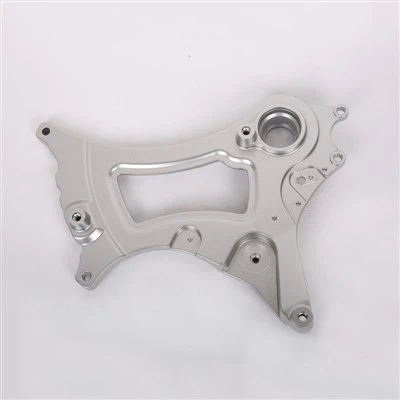
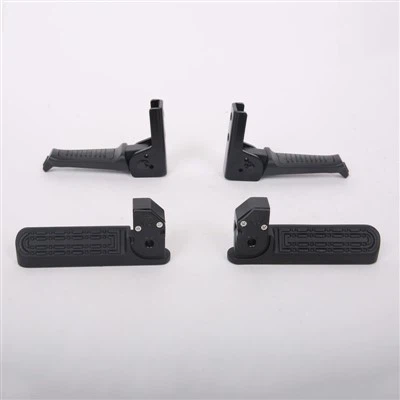
As a supplier of connecting plates, I often encounter inquiries about the shear strength of these crucial components. Shear strength is a fundamental property that determines the ability of a connecting plate to withstand forces that act parallel to its cross - sectional area. In this blog, I will delve into the concept of shear strength, its significance in the context of connecting plates, and the factors that influence it.
Understanding Shear Strength
Shear strength can be defined as the maximum shear stress that a material can withstand before it fails. When a force is applied parallel to the surface of a connecting plate, shear stress is generated within the material. If this stress exceeds the shear strength of the plate, the plate will experience deformation or even fracture.
Mathematically, shear stress ($\tau$) is calculated using the formula $\tau=\frac{F}{A}$, where $F$ is the force applied parallel to the cross - sectional area $A$ of the connecting plate. The shear strength ($\tau_{max}$) is the value of shear stress at which the material fails.
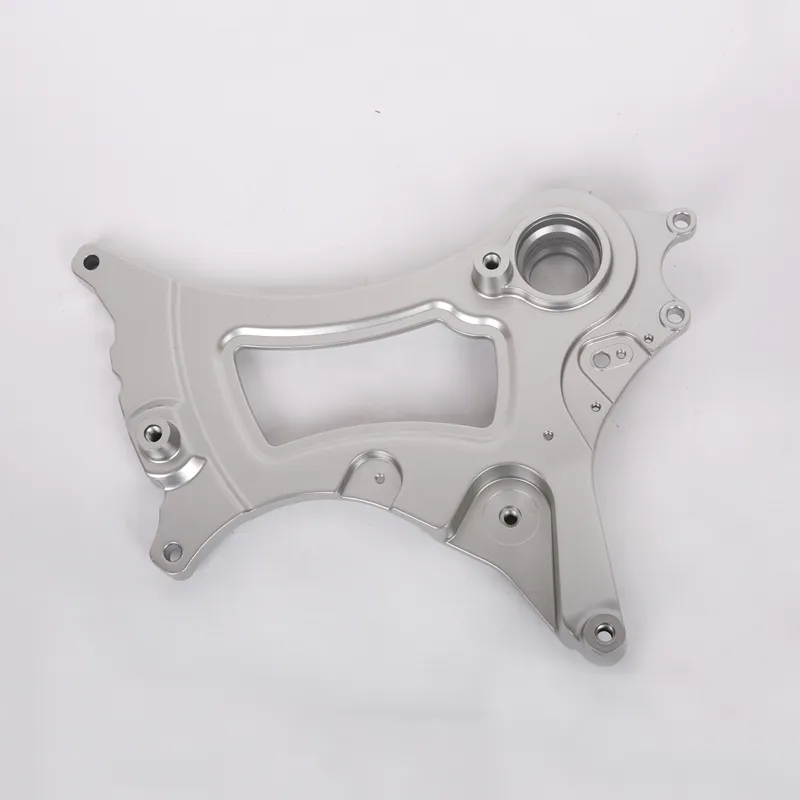

Importance of Shear Strength in Connecting Plates
Connecting plates are used in a wide range of applications, from automotive and aerospace industries to construction and machinery. In all these applications, the ability of the connecting plate to resist shear forces is of utmost importance.
In the automotive industry, for example, connecting plates are used to join different components of the engine, transmission, and chassis. These plates must be able to withstand the high - speed vibrations and dynamic forces generated during vehicle operation. A connecting plate with insufficient shear strength can lead to component failure, which can result in costly repairs and even safety hazards.
In construction, connecting plates are used to connect structural members such as beams and columns. The shear strength of these plates is critical for ensuring the stability and integrity of the entire structure. If a connecting plate fails under shear stress, it can cause the collapse of the structure, endangering lives and property.
Factors Affecting the Shear Strength of Connecting Plates
Material Properties
The material from which the connecting plate is made is one of the most significant factors affecting its shear strength. Different materials have different inherent shear strengths. For example, metals such as steel and aluminum are commonly used for connecting plates due to their high strength - to - weight ratios.
Steel connecting plates typically have high shear strengths because of the strong metallic bonds between their atoms. The carbon content in steel can also affect its shear strength. Higher carbon steels generally have greater strength but may be more brittle. Aluminum, on the other hand, is lighter than steel and has good corrosion resistance. However, its shear strength is generally lower than that of steel.
Plate Geometry
The geometry of the connecting plate also plays a crucial role in determining its shear strength. The thickness of the plate is a key factor. A thicker plate will generally have a higher shear strength because it has a larger cross - sectional area to resist the shear forces.
The shape of the plate can also affect its shear strength. Plates with irregular shapes or sharp corners may have stress concentrations, which can reduce their shear strength. For example, a plate with a notch or a hole may experience higher shear stresses around these areas, making it more prone to failure.
Manufacturing Process
The manufacturing process used to produce the connecting plate can have a significant impact on its shear strength. Processes such as forging, casting, and machining can affect the internal structure of the material and its mechanical properties.
Forged connecting plates are often preferred because the forging process aligns the grain structure of the metal, resulting in improved strength and toughness. Casting, on the other hand, can introduce defects such as porosity and inclusions, which can reduce the shear strength of the plate. Machining operations can also affect the surface finish and the integrity of the plate, which can in turn influence its shear strength.
Testing the Shear Strength of Connecting Plates
To ensure that connecting plates meet the required shear strength specifications, they must be tested. There are several standard testing methods available for determining the shear strength of materials.
One common method is the single - shear test. In this test, a connecting plate is clamped between two fixtures, and a force is applied parallel to the cross - sectional area of the plate until it fails. The maximum force applied during the test is recorded, and the shear strength is calculated using the formula mentioned earlier.
Another method is the double - shear test, which is more accurate for measuring the shear strength of thick plates. In a double - shear test, the plate is placed between three fixtures, and the force is applied in such a way that the plate is subjected to shear stress at two cross - sectional areas simultaneously.
Applications of Connecting Plates with High Shear Strength
Connecting plates with high shear strength are used in a variety of demanding applications.
In the motorcycle industry, Motorcycle Connecting Board and Motorcycle Connecting Plate are crucial components. These plates are used to connect different parts of the motorcycle's engine, frame, and suspension system. They must be able to withstand the high - speed vibrations and dynamic forces generated during motorcycle operation. A high - shear - strength connecting plate ensures the reliability and safety of the motorcycle.
In the aerospace industry, connecting plates are used to join structural components of aircraft and spacecraft. These plates must be able to withstand extreme forces and environmental conditions. High - shear - strength connecting plates are essential for ensuring the structural integrity of the aircraft and the safety of the passengers and crew.
Conclusion
Shear strength is a critical property when it comes to connecting plates. As a supplier, I understand the importance of providing connecting plates with the right shear strength for different applications. By considering factors such as material properties, plate geometry, and manufacturing processes, we can produce high - quality connecting plates that meet the most demanding requirements.
If you are in need of connecting plates for your project, whether it's for motorcycles, aerospace, or any other industry, I encourage you to reach out for a detailed discussion. We can work together to determine the best connecting plate solution based on your specific shear strength requirements.
References
- Callister, W. D., & Rethwisch, D. G. (2017). Materials Science and Engineering: An Introduction. Wiley.
- Shigley, J. E., Mischke, C. R., & Budynas, R. G. (2004). Mechanical Engineering Design. McGraw - Hill.