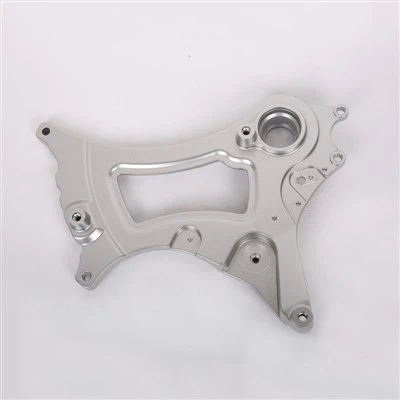
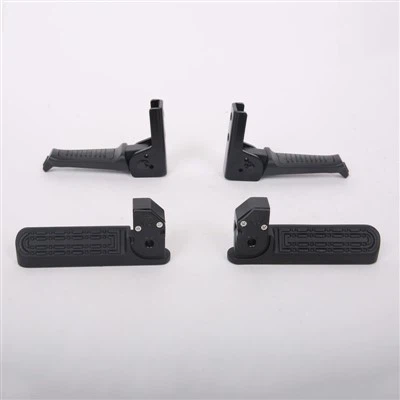
Hey there! As a supplier of Aluminum Alloy Forgings, I've got a lot to share about the radiographic testing methods for these nifty products. Radiographic testing is super important in our line of work because it helps us ensure the quality and integrity of the aluminum alloy forgings we produce.
First off, let's talk about what radiographic testing actually is. It's a non - destructive testing method that uses radiation, like X - rays or gamma rays, to look inside the forgings. This way, we can detect any internal defects that might not be visible on the surface.
One of the most common radiographic testing methods for aluminum alloy forgings is X - ray testing. X - rays are a form of electromagnetic radiation. They can penetrate through the aluminum alloy forgings, and the amount of radiation that passes through is captured on a detector, like a film or a digital sensor.
The process of X - ray testing is pretty straightforward. We place the aluminum alloy forging between the X - ray source and the detector. The X - rays pass through the forging, and the internal structure of the forging affects how the X - rays are absorbed. Dense areas, like solid metal, absorb more X - rays, while areas with defects, such as cracks or porosity, allow more X - rays to pass through. This creates a contrast on the detector, and we can analyze the image to find any issues.
X - ray testing has some great advantages. It can provide high - resolution images, which means we can spot even the tiniest defects. It's also relatively fast, so we can test a large number of forgings in a short time. However, it does have some limitations. X - rays have limited penetration power, especially for thicker forgings. So, if we're dealing with really thick aluminum alloy forgings, X - ray testing might not be the best option.
Another radiographic testing method is gamma - ray testing. Gamma rays are also a form of electromagnetic radiation, but they have higher energy than X - rays. This gives them greater penetration power, which is a big plus when testing thick aluminum alloy forgings.
In gamma - ray testing, we use a radioactive source, like cobalt - 60 or iridium - 192, to emit gamma rays. Similar to X - ray testing, the gamma rays pass through the forging and are detected on the other side. The resulting image shows the internal structure of the forging, and we can look for defects.
Gamma - ray testing is great for thick forgings, but it does come with some drawbacks. The radioactive sources can be dangerous if not handled properly. We need to follow strict safety protocols to ensure the well - being of our workers. Also, gamma - ray testing is generally slower than X - ray testing because we need to wait for the radioactive source to decay and for the image to develop.
There's also computed tomography (CT) scanning, which is a more advanced radiographic testing method. CT scanning uses a series of X - ray images taken from different angles around the forging. These images are then processed by a computer to create a 3D model of the internal structure of the forging.
CT scanning offers a very detailed view of the forging. We can see the exact location and size of defects in three dimensions, which is really useful for understanding the severity of the problem. It's great for complex - shaped forgings where traditional radiographic methods might not provide a clear picture. However, CT scanning is expensive and time - consuming. It requires specialized equipment and trained operators, so we usually only use it for high - value or critical forgings.
Now, let's talk about why these radiographic testing methods are so important for us as a supplier of Aluminum Alloy Forgings. Our customers rely on us to provide high - quality forgings for their applications. Whether it's for the aerospace industry, automotive industry, or any other field, the integrity of the forgings is crucial.
By using radiographic testing, we can detect defects early in the production process. This allows us to take corrective actions, such as re - working the forgings or scrapping them if they're too defective. It helps us avoid sending out faulty products, which could lead to costly recalls and damage to our reputation.
In addition, radiographic testing helps us meet industry standards and regulations. Many industries have strict quality control requirements, and radiographic testing is often a part of those requirements. By performing these tests, we can prove to our customers that our forgings meet the necessary standards.
We also use radiographic testing to improve our manufacturing processes. By analyzing the defects we find, we can identify areas in our production line that need improvement. For example, if we notice a lot of porosity in our forgings, we can adjust our melting or forging parameters to reduce the occurrence of this defect.
If you're in the market for high - quality Aluminum Alloy Forgings, you can count on us. We use these advanced radiographic testing methods to ensure that every forging we produce is of the highest quality. Whether you need small, simple forgings or large, complex ones, we've got the expertise and technology to meet your needs.

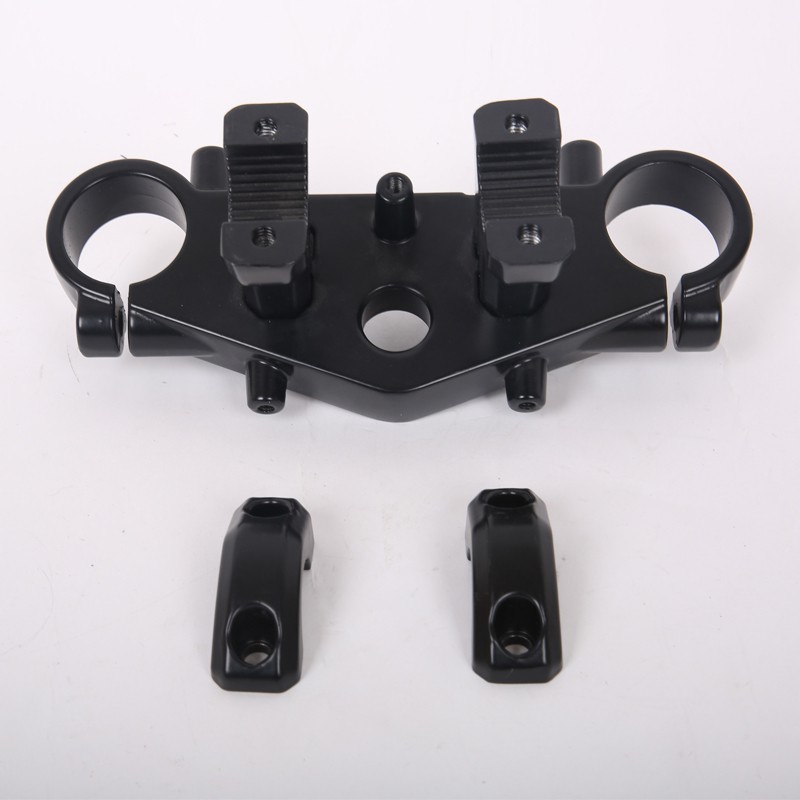
And if you're interested in Aluminum Alloy Liquid Forging, we can also provide that service. Our team is always ready to work with you to find the best solutions for your specific requirements.
So, if you're looking for a reliable supplier of aluminum alloy forgings, don't hesitate to reach out. We're here to help you with all your forging needs and ensure that you get the best products in the market.
References
- ASNT (American Society for Nondestructive Testing). Nondestructive Testing Handbook: Radiography Volume.
- ASTM International. ASTM standards related to radiographic testing of metals.