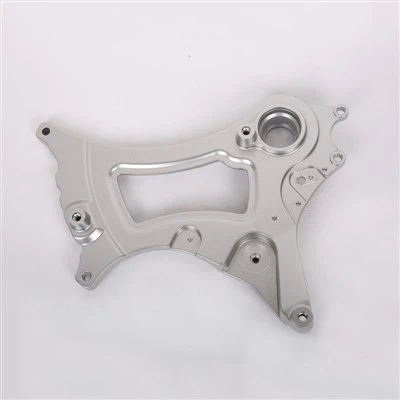
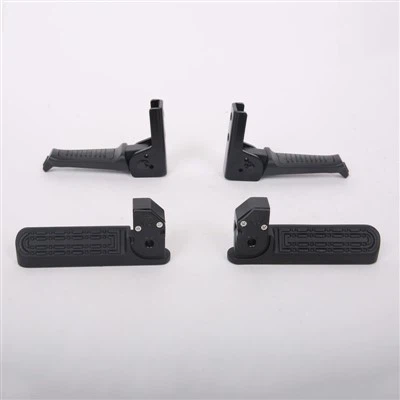
Aluminium die casting molds are widely used in various industries due to their ability to produce complex shapes with high precision and efficiency. As a supplier of Aluminium Die Casting Molds, I have witnessed firsthand the many advantages they offer. However, like any manufacturing process, there are also some disadvantages that need to be considered. In this blog post, I will discuss some of the key disadvantages of aluminium die casting molds.
High Initial Investment
One of the most significant disadvantages of aluminium die casting molds is the high initial investment required. Designing and manufacturing a high - quality aluminium die casting mold is a complex and costly process. It involves advanced engineering techniques, precision machining, and the use of high - grade materials. The cost of raw materials, such as tool steel, which is commonly used for making the molds, can be substantial. Additionally, the labor costs associated with the design, machining, and finishing of the mold are also high.
For small and medium - sized enterprises, this high upfront cost can be a major barrier to entry. They may not have the financial resources to invest in the development of a custom - made aluminium die casting mold, especially if they only need to produce a small quantity of parts. This can limit their ability to take advantage of the benefits of die casting technology and force them to look for alternative manufacturing methods.
Limited Design Flexibility
Although aluminium die casting can produce complex shapes, there are still some limitations to the design flexibility. The process relies on the use of a two - part mold (a fixed half and a moving half), which means that undercuts and internal features can be difficult to achieve. In some cases, additional operations such as machining or secondary molding may be required to create these features, which can increase the production cost and time.
Moreover, the draft angles required for the ejection of the part from the mold can also restrict the design. Parts with vertical walls or small draft angles may be difficult to eject, leading to potential damage to the part or the mold. Designers need to carefully consider these factors when designing parts for aluminium die casting, which can sometimes result in compromises in the final product design.
Long Lead Times
The production of aluminium die casting molds is a time - consuming process. It typically involves multiple stages, including design, machining, heat treatment, and surface finishing. Each of these stages requires careful planning and execution, and any delay in one stage can have a cascading effect on the overall production schedule.
The lead time for a new die casting mold can range from several weeks to several months, depending on the complexity of the design and the availability of the manufacturing resources. This long lead time can be a problem for companies that need to quickly respond to market demands or launch new products. They may have to wait for a long time before they can start producing parts, which can give their competitors an advantage in the market.
High Tooling Wear and Maintenance
Aluminium die casting involves high - pressure injection of molten aluminium into the mold. This high - pressure and high - temperature environment can cause significant wear and tear on the mold. The molten aluminium can erode the surface of the mold, leading to dimensional changes and surface roughness. Over time, this wear can affect the quality of the parts produced and reduce the lifespan of the mold.
Regular maintenance is required to keep the mold in good working condition. This includes cleaning, inspection, and repair of any damaged areas. The cost of maintenance can be significant, especially for large or complex molds. In some cases, the mold may need to be replaced after a certain number of production cycles, which can add to the overall production cost.
Environmental Concerns
The aluminium die casting process has some environmental implications. The melting of aluminium requires a large amount of energy, which contributes to greenhouse gas emissions. Additionally, the use of lubricants and release agents in the die casting process can generate waste and pollutants. These substances need to be properly managed to prevent environmental contamination.
Moreover, the disposal of used molds and scrap aluminium can also be a challenge. If not properly recycled, these materials can end up in landfills, which is not only wasteful but also has a negative impact on the environment. As a supplier, we are aware of these environmental concerns and are constantly looking for ways to reduce our environmental footprint, such as using more energy - efficient melting equipment and implementing proper waste management practices.
High Production Volume Requirements
Aluminium die casting is most cost - effective when producing large volumes of parts. The high initial investment in the mold needs to be amortized over a large number of parts to make the process economically viable. For low - volume production, the cost per part can be prohibitively high, as the cost of the mold represents a significant portion of the total production cost.
Companies that need to produce a small quantity of parts may find that other manufacturing methods, such as machining or 3D printing, are more suitable. These methods have lower upfront costs and can be more flexible for small - batch production. However, for high - volume production, aluminium die casting remains a popular choice due to its high productivity and low cost per part.
Quality Control Challenges
Ensuring the quality of aluminium die - cast parts can be a challenge. The process is affected by many factors, such as the temperature of the molten aluminium, the injection pressure, the cooling rate, and the mold temperature. Any variation in these factors can lead to defects in the parts, such as porosity, shrinkage, or cracks.
Porosity is one of the most common defects in aluminium die - cast parts. It is caused by the entrapment of gas bubbles in the molten aluminium during the casting process. Shrinkage occurs when the aluminium solidifies and contracts, which can lead to voids or dimensional inaccuracies in the part. Cracks can be caused by thermal stress, improper gating design, or excessive pressure during the casting process.
To ensure the quality of the parts, strict quality control measures need to be implemented throughout the production process. This includes regular inspection of the parts, monitoring of the process parameters, and adjustment of the process as needed. However, these quality control measures can add to the production cost and complexity.
Conclusion
In conclusion, while aluminium die casting molds offer many advantages, such as high productivity, good dimensional accuracy, and excellent surface finish, they also have several disadvantages. The high initial investment, limited design flexibility, long lead times, high tooling wear and maintenance, environmental concerns, high production volume requirements, and quality control challenges are all factors that need to be carefully considered when choosing aluminium die casting as a manufacturing method.
As a supplier of Pressure Die Casting Mould, Aluminum Alloy Die-casting Mold, and High-pressure Die Casting Mold, we understand these challenges and are committed to providing our customers with the best possible solutions. We work closely with our customers to optimize the design of the molds, improve the production process, and ensure the quality of the parts.


If you are considering using aluminium die casting for your next project, we encourage you to contact us for a detailed discussion. Our team of experts can help you evaluate the feasibility of your project, address any concerns you may have, and provide you with a competitive quote. We look forward to the opportunity to work with you and help you achieve your manufacturing goals.
References
- Campbell, J. (2003). Castings. Butterworth - Heinemann.
- Kalpakjian, S., & Schmid, S. R. (2010). Manufacturing Engineering and Technology. Pearson Prentice Hall.
3.ASM Handbook Volume 15: Casting. ASM International.