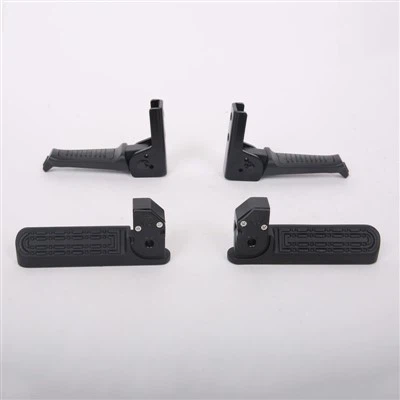
Do motorcycle rear armrests work well on rough roads? This is a question that many motorcycle enthusiasts and riders often ponder, especially those who frequently navigate through uneven terrains. As a supplier of motorcycle rear armrests, I've had the opportunity to delve deep into this topic, drawing on both real - world feedback from riders and technical knowledge about the product.
The Function of Motorcycle Rear Armrests
Before we discuss their performance on rough roads, let's first understand the general functions of motorcycle rear armrests. Motorcycle rear armrests, such as the Motorcycle Aluminum Rear Grab Bar, Aluminum Rear Armrest, and Motorcycle Rear Handrail, serve multiple purposes.
One of the primary functions is to provide support for passengers. When riding on a motorcycle, passengers need something to hold onto to maintain their balance. Rear armrests offer a stable grip, allowing passengers to feel more secure during the ride. For riders, they can also contribute to the overall aesthetics of the motorcycle, enhancing its visual appeal.
Challenges on Rough Roads
Rough roads present a unique set of challenges for motorcycle components, and rear armrests are no exception. The constant jolts, vibrations, and impacts can put a significant strain on the armrests. The uneven surface causes the motorcycle to bounce and sway, which means the armrests need to withstand lateral and vertical forces.
In addition, the dust, mud, and water on rough roads can also affect the durability of the armrests. Corrosion and wear and tear are common issues that can occur over time, especially if the armrests are not made of high - quality materials or properly treated.
How Rear Armrests Perform on Rough Roads
Support and Stability
On rough roads, the support provided by rear armrests becomes even more crucial. Passengers are constantly being jostled around, and having a reliable armrest to hold onto can prevent them from losing their balance. Our high - quality rear armrests are designed with strong materials and a sturdy structure. For example, the Motorcycle Aluminum Rear Grab Bar is made of high - grade aluminum alloy, which offers excellent strength - to - weight ratio. It can withstand the strong forces generated on rough roads, providing a stable support for passengers.
Durability
Durability is a key factor when it comes to using rear armrests on rough roads. Our Aluminum Rear Armrest is treated with a special anti - corrosion coating. This coating protects the armrest from the harsh elements on rough roads, such as water, mud, and salt. It also resists scratches and abrasions, ensuring that the armrest remains in good condition even after long - term use on rough terrains.
Comfort
Comfort is another aspect to consider. The vibrations on rough roads can be quite intense, and a poorly designed armrest can cause discomfort for passengers. Our rear armrests are ergonomically designed to fit the natural grip of the hand. They are padded in the right places to absorb some of the vibrations, reducing the stress on the hands and arms of passengers.
Case Studies and User Feedback
We've received a lot of feedback from riders who have used our rear armrests on rough roads. One rider, John, who often goes on off - road adventures, shared his experience. He said that before using our Motorcycle Rear Handrail, his passengers were always complaining about the lack of support and comfort on rough roads. After installing our handrail, he noticed a significant improvement. His passengers felt more secure, and the overall riding experience became more enjoyable.
Another rider, Sarah, mentioned that she was worried about the durability of the armrests on her long - distance off - road trips. However, after several months of use, she was pleasantly surprised to find that the Aluminum Rear Armrest still looked and functioned as good as new. The anti - corrosion coating had effectively protected the armrest from the harsh environment.
Technical Considerations for Rough Road Use
When designing rear armrests for rough road use, several technical aspects need to be considered. The mounting system is crucial. It should be strong enough to hold the armrest firmly in place, even under the most extreme conditions. Our armrests are equipped with a reliable mounting mechanism that ensures a tight fit to the motorcycle frame.


The material selection also plays a vital role. As mentioned earlier, high - grade aluminum alloy is a popular choice due to its strength and light weight. However, other materials such as stainless steel can also be used for added durability, especially in areas where corrosion is a major concern.
Maintenance Tips for Rear Armrests on Rough Roads
To ensure the long - term performance of rear armrests on rough roads, proper maintenance is essential. After each ride on a rough road, it's recommended to clean the armrests thoroughly. Use a mild detergent and a soft cloth to remove the dirt, mud, and dust.
Inspect the armrests regularly for any signs of damage, such as cracks, loose bolts, or excessive wear. Tighten any loose bolts if necessary. If you notice any significant damage, it's best to replace the armrest immediately to avoid any safety issues.
Conclusion
In conclusion, motorcycle rear armrests can work very well on rough roads if they are well - designed, made of high - quality materials, and properly maintained. They provide essential support and stability for passengers, enhance the overall riding experience, and can withstand the challenges presented by rough terrains.
As a supplier of motorcycle rear armrests, we are committed to providing products that meet the highest standards of quality and performance. Our Motorcycle Aluminum Rear Grab Bar, Aluminum Rear Armrest, and Motorcycle Rear Handrail are all carefully crafted to ensure optimal performance on both smooth and rough roads.
If you are interested in our motorcycle rear armrests or have any questions about their performance on rough roads, we encourage you to contact us for further discussion and potential procurement. We look forward to working with you to enhance your motorcycle riding experience.
References
- Motorcycle Component Design and Engineering Handbook
- Off - Road Motorcycle Riding Guide
- Studies on the Durability of Motorcycle Accessories on Rough Terrains