As a rear fork supplier, I often get asked about the standard length of a rear fork. It's a question that doesn't have a one - size - fits - all answer, as there are many factors that come into play.
Let's first understand what a rear fork is. A rear fork is an essential part of a vehicle, especially in scooters, motorcycles, and some bicycles. It holds the rear wheel in place and plays a crucial role in the vehicle's stability, handling, and overall performance.
Factors Affecting the Standard Length
Vehicle Type
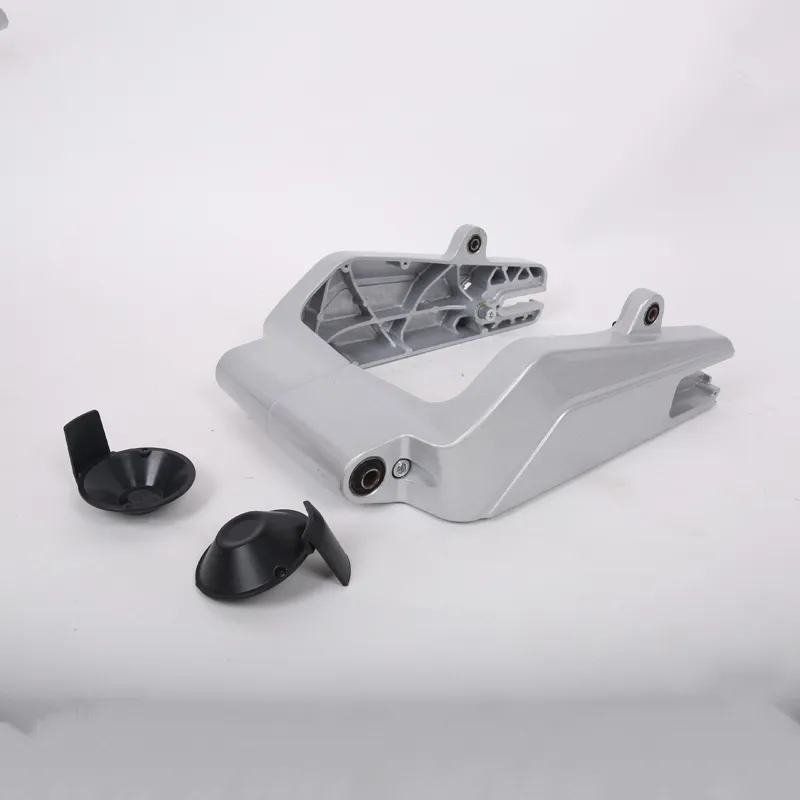
The type of vehicle is the most significant factor when determining the rear fork length. For example, in electric scooters, the design is often focused on portability and urban mobility. A shorter rear fork can make the scooter more compact and easier to maneuver in tight spaces. You can check out our Electric Scooter Swing Arm and Electric Scooter Rear Fork for a better understanding of how they are tailored for electric scooters.
On the other hand, motorcycles, especially high - performance ones, usually require a longer rear fork. A longer rear fork provides better stability at high speeds. It helps in reducing the wheelie tendency and gives the rider more control over the bike. Bicycles also vary in rear fork length depending on whether they are mountain bikes, road bikes, or BMX bikes. Mountain bikes might have a longer rear fork to handle rough terrains and provide better shock absorption, while BMX bikes often have a shorter one for more agile tricks.
Wheel Size
The size of the rear wheel is another important factor. A larger wheel generally requires a longer rear fork to accommodate it properly. If the rear fork is too short for the wheel, it can lead to clearance issues, such as the wheel rubbing against the frame or other components. This can cause damage to the wheel and the fork and also affect the vehicle's performance.
Suspension System
The type of suspension system used in the vehicle also impacts the rear fork length. Vehicles with more complex suspension systems, like multi - link or long - travel suspensions, might need a longer rear fork to house the suspension components. These components need space to move and operate effectively. For instance, a rear fork with a long - travel suspension can provide a smoother ride on uneven surfaces, but it requires more length to function correctly.
Common Ranges of Rear Fork Length
Electric Scooters
In the world of electric scooters, rear fork lengths typically range from around 150mm to 300mm. The shorter lengths are more common in foldable and lightweight scooters designed for short - distance commuting. These scooters prioritize portability and ease of use. Longer rear forks, closer to the 300mm mark, are found in more high - end electric scooters that offer better stability and performance. Our Aluminium Alloy Flat Fork is available in different lengths to meet the diverse needs of electric scooter manufacturers.
Motorcycles
Motorcycle rear fork lengths vary widely depending on the bike's class and purpose. Cruiser motorcycles often have longer rear forks, sometimes exceeding 600mm. This gives them a laid - back look and better stability on long highway rides. Sportbikes, on the other hand, have a more balanced rear fork length, usually in the range of 400mm to 550mm. This allows for quick handling and high - speed performance.
Bicycles
For bicycles, mountain bike rear fork lengths can be around 400mm to 500mm, which provides enough space for the rear wheel and the suspension system. Road bikes typically have shorter rear forks, in the range of 350mm to 400mm, to enhance speed and efficiency. BMX bikes have the shortest rear forks, often less than 300mm, to enable quick turns and tricks.
Why Standardization is Challenging
There isn't a single, universal standard for rear fork length because of the vast number of vehicle designs and user requirements. Different manufacturers have their own ideas about what makes the best - performing vehicle. Some might prioritize speed, while others focus on comfort or portability.
Moreover, technological advancements are constantly changing the game. New materials, like carbon fiber and advanced alloys, allow for more innovative designs. These materials can be used to create shorter rear forks that still offer the same level of strength and performance as longer, more traditional ones.
Importance of the Right Rear Fork Length
Getting the rear fork length right is crucial for the overall performance of the vehicle. If the rear fork is too short, it can lead to a harsh ride, poor handling, and increased risk of accidents. For example, in a motorcycle, a short rear fork can make the bike more prone to wheelies, which can be dangerous, especially at high speeds.
On the other hand, an overly long rear fork can make the vehicle less agile. In an electric scooter, a long rear fork can make it more difficult to fold and carry, defeating the purpose of a portable vehicle.
Our Role as a Rear Fork Supplier
As a rear fork supplier, we understand the importance of providing the right rear fork length for different applications. We work closely with our customers, whether they are electric scooter manufacturers, motorcycle builders, or bicycle companies, to understand their specific requirements.
We have a wide range of rear forks in different lengths, materials, and designs. Our team of experts can help you choose the most suitable rear fork for your vehicle. Whether you need a short, lightweight rear fork for an electric scooter or a long, heavy - duty one for a motorcycle, we've got you covered.
Contact Us for Your Rear Fork Needs
If you're in the market for high - quality rear forks and are looking for the perfect length for your vehicle, don't hesitate to reach out. We're here to assist you in finding the best solution for your specific needs. Whether you're a small startup or a large - scale manufacturer, we can provide you with top - notch rear forks at competitive prices.

Let's work together to ensure your vehicles perform at their best. Contact us for a detailed discussion about your rear fork requirements and let's get started on a successful partnership.
References
- Motorcycle Design and Technology Handbook
- Electric Scooter Engineering Manual
- Bicycle Design and Manufacturing Guide