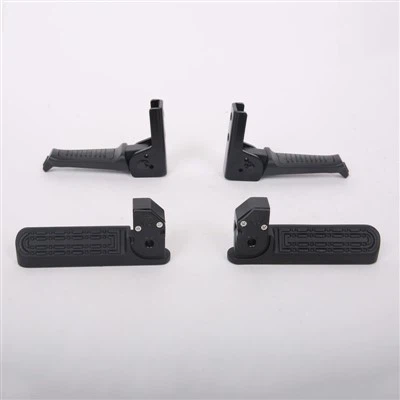
Hey there! As a forging parts supplier deeply involved in the garment - making machinery industry, I'm super excited to share with you all about the forging parts used in this field.
Let's start by understanding why forging parts are so crucial in garment - making machinery. Garment - making machines need to be durable, precise, and efficient. Forging parts offer excellent mechanical properties, such as high strength, good toughness, and resistance to wear and tear. These properties ensure that the machines can operate smoothly for long periods, reducing downtime and maintenance costs.
One of the most common forging parts in the garment - making machinery industry is the crankshaft. The crankshaft is like the heart of many sewing machines. It converts the rotary motion of the motor into the reciprocating motion required for the needle to move up and down. A well - forged crankshaft can handle high - speed operations without deforming, which is essential for achieving high - quality stitching. The forging process helps to align the grain structure of the metal, making the crankshaft stronger and more reliable.
Another important forging part is the gear. Gears are used to transfer power and control the speed and torque of different components in the garment - making machine. For example, in a button - sewing machine, gears are used to ensure that the button is sewn on at the right speed and with the correct tension. Forged gears have a better surface finish and more accurate tooth profiles compared to gears made by other methods. This results in smoother operation, less noise, and longer service life.
The cam is also a key forging part. Cams are used to control the movement of various parts in the machine, such as the feed dog in a sewing machine. The feed dog moves the fabric forward at a consistent rate during the sewing process. A forged cam can provide precise and reliable movement, which is crucial for achieving uniform stitching and preventing fabric jams.
Now, let's talk about the materials used for these forging parts. Steel is a very popular choice. Carbon steel and alloy steel are commonly used because they offer a good balance of strength, hardness, and cost - effectiveness. For example, 4140 alloy steel is often used for high - performance forging parts in garment - making machinery. It has excellent toughness and can be heat - treated to achieve the desired hardness.
However, aluminum alloys are also gaining popularity in recent years. Aluminum alloys are lightweight, corrosion - resistant, and have good thermal conductivity. They are especially suitable for parts that need to be lightweight to reduce the overall weight of the machine or for parts that are exposed to a humid environment. You can learn more about Aluminum Alloy Liquid Forging and Aluminum Alloy Forgings on our website.
The forging process itself is a complex and precise operation. There are different forging methods, such as open - die forging, closed - die forging, and precision forging. Open - die forging is suitable for producing large and simple - shaped parts. Closed - die forging, on the other hand, is used to produce parts with more complex shapes and higher precision. Precision forging can achieve very tight tolerances and excellent surface finishes, which is ideal for parts in high - end garment - making machinery.

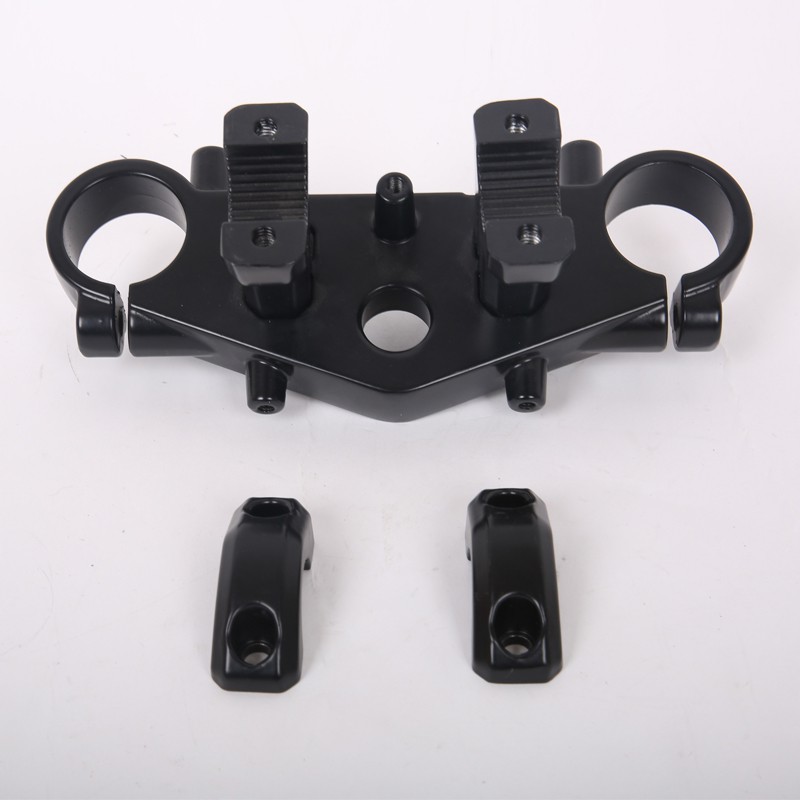
Quality control is of utmost importance in the production of forging parts. We use a variety of inspection methods, including non - destructive testing (NDT) techniques such as ultrasonic testing and magnetic particle testing. These methods can detect internal defects in the forging parts, ensuring that only high - quality parts are delivered to our customers.
As a forging parts supplier, we understand the unique requirements of the garment - making machinery industry. We work closely with our customers to develop customized forging solutions. Whether it's a new design or an improvement to an existing part, we have the expertise and experience to meet their needs.
We also focus on continuous improvement. We are constantly researching and developing new materials and forging processes to improve the performance and quality of our forging parts. For example, we are exploring new heat - treatment techniques to enhance the hardness and toughness of our parts even further.
In addition to the technical aspects, we also offer excellent customer service. We have a team of experienced sales and technical support staff who can provide prompt and professional assistance. We can help our customers with everything from product selection to installation and maintenance.
If you are in the garment - making machinery industry and are looking for high - quality forging parts, we would love to hear from you. Whether you need a small quantity of custom - made parts or a large - scale production run, we can provide you with the best solutions. Contact us today to start a discussion about your forging part requirements. We are confident that we can meet your needs and exceed your expectations.
In conclusion, forging parts play a vital role in the garment - making machinery industry. They ensure the smooth, efficient, and reliable operation of these machines. With the right materials, forging processes, and quality control, we can provide high - performance forging parts that will help your garment - making machinery stand out in the market. So, don't hesitate to reach out to us and let's work together to take your garment - making machinery to the next level.
References:
- Machinery's Handbook, 31st Edition
- ASM Handbook Volume 14A: Metalworking: Forging