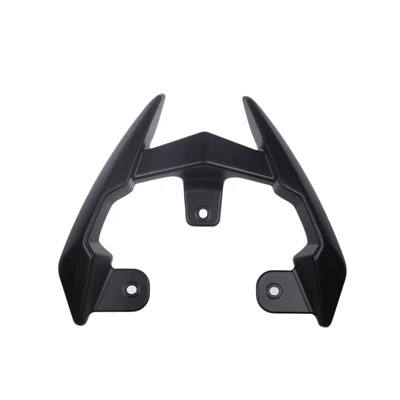
Establishing a quality control system for Aluminium Die Casting Mold manufacturing is crucial for a supplier like us to ensure the production of high - quality molds that meet the diverse needs of our customers. In this blog, I will share some key steps and considerations in setting up an effective quality control system.
1. Understanding Customer Requirements
The first and most fundamental step in quality control is to fully understand our customers' requirements. Each customer may have unique specifications for their Aluminium Die Casting Mold. This includes the size, shape, surface finish, and mechanical properties of the mold. We need to communicate closely with our customers from the initial stage of the project.
We should have a well - defined process for gathering requirements. This may involve face - to - face meetings, detailed questionnaires, and technical discussions. By documenting all the requirements accurately, we can set clear goals for the manufacturing process. For example, if a customer requires a mold with a specific draft angle for easy part ejection, we need to ensure that this requirement is clearly understood and incorporated into the design and manufacturing plans.
2. Design Review
Once the customer requirements are gathered, the next step is the design phase. A well - designed mold is the foundation of a high - quality die - casting mold. We should have a team of experienced designers who are proficient in using advanced design software such as CAD (Computer - Aided Design).


The design review process is essential. It involves multiple rounds of checks to ensure that the design meets the customer's requirements, as well as industry standards. For instance, the gating and runner system design should be optimized to ensure uniform filling of the molten aluminium in the mold cavity. The cooling system design is also critical to control the solidification process and prevent defects such as shrinkage porosity.
During the design review, we should also consider the manufacturability of the mold. The design should be practical and cost - effective to produce. For example, complex geometries may increase the manufacturing cost and time, so we need to balance the design requirements with the manufacturing capabilities.
3. Material Selection
The quality of the materials used in Aluminium Die Casting Mold manufacturing has a significant impact on the final product quality. We need to select high - quality materials that can withstand the high pressure and temperature during the die - casting process.
Common materials for die - casting molds include hot - work tool steels such as H13. When selecting materials, we should consider factors such as hardness, toughness, thermal conductivity, and wear resistance. We should also source materials from reliable suppliers and conduct incoming material inspections.
Incoming material inspections involve checking the material certificates, conducting hardness tests, and performing non - destructive testing such as ultrasonic testing to detect any internal defects in the materials. Only materials that meet our strict quality standards should be used in the manufacturing process.
4. Manufacturing Process Control
The manufacturing process of Aluminium Die Casting Molds consists of multiple steps, including machining, heat treatment, surface treatment, and assembly. Each step needs to be carefully controlled to ensure the quality of the final product.
Machining
Machining is a critical step in mold manufacturing. We should use advanced machining equipment such as CNC (Computer Numerical Control) machines to ensure high precision. The machining parameters, such as cutting speed, feed rate, and depth of cut, need to be optimized to achieve the required dimensional accuracy and surface finish.
During the machining process, we should also conduct in - process inspections. This can be done using measuring tools such as calipers, micrometers, and coordinate measuring machines (CMMs). Any deviations from the design specifications should be corrected immediately.
Heat Treatment
Heat treatment is used to improve the mechanical properties of the mold. The heat treatment process, including quenching, tempering, and annealing, needs to be carefully controlled. The temperature, heating rate, and holding time should be strictly followed according to the material specifications.
After heat treatment, we should conduct hardness testing and microstructure analysis to ensure that the heat treatment has achieved the desired results. Any non - compliant parts should be re - heat - treated or discarded.
Surface Treatment
Surface treatment can improve the corrosion resistance, wear resistance, and release properties of the mold. Common surface treatment methods include nitriding, chrome plating, and PVD (Physical Vapor Deposition) coating.
The surface treatment process should be carefully controlled to ensure uniform coating thickness and good adhesion. We should also conduct surface roughness measurements and coating adhesion tests to ensure the quality of the surface treatment.
Assembly
The assembly of the mold components is the final step in the manufacturing process. All components should be carefully cleaned and inspected before assembly. The assembly process should be carried out according to the assembly drawings, and the alignment and fit of the components should be checked.
After assembly, the mold should be tested to ensure that it functions properly. This includes checking the movement of the slides, the opening and closing of the mold, and the ejection of the parts.
5. Quality Inspection and Testing
In addition to in - process inspections, we should also conduct comprehensive final inspections and testing on the finished Aluminium Die Casting Molds.
Dimensional Inspection
Dimensional inspection is used to ensure that the mold meets the design specifications. We can use CMMs to measure the key dimensions of the mold with high accuracy. Any dimensional deviations beyond the tolerance range should be corrected.
Functional Testing
Functional testing is used to verify that the mold can produce high - quality die - cast parts. We can conduct trial runs on the die - casting machine using the mold. During the trial runs, we should check the quality of the die - cast parts, including the surface finish, dimensional accuracy, and the presence of any defects such as porosity, cracks, or flash.
Non - Destructive Testing
Non - destructive testing methods such as ultrasonic testing, magnetic particle testing, and X - ray testing can be used to detect any internal defects in the mold. These tests can help us identify potential problems that may not be visible on the surface.
6. Continuous Improvement
Quality control is an ongoing process. We should continuously monitor and evaluate the performance of our quality control system. By collecting and analyzing data from the manufacturing process, such as defect rates, production yields, and customer feedback, we can identify areas for improvement.
We can use quality management tools such as Pareto charts, fishbone diagrams, and control charts to analyze the data and identify the root causes of problems. Based on the analysis results, we can implement corrective and preventive actions to improve the quality of our Aluminium Die Casting Molds.
For example, if we find that a certain type of defect occurs frequently during the die - casting process, we can investigate the root cause, which may be related to the design, material, or manufacturing process. We can then take appropriate actions such as modifying the design, changing the material supplier, or adjusting the manufacturing parameters.
7. Supplier Management
As an Aluminium Die Casting Mold supplier, we also rely on our suppliers for raw materials, components, and services. Therefore, supplier management is an important part of our quality control system.
We should select reliable suppliers based on their quality records, production capabilities, and reputation. We should establish long - term partnerships with our suppliers and conduct regular audits to ensure that they meet our quality requirements.
We should also have a clear communication channel with our suppliers. In case of any quality issues with the supplied materials or components, we can quickly communicate with the suppliers and take appropriate actions such as returning the non - compliant products or requesting corrective actions.
Conclusion
Establishing a quality control system for Aluminium Die Casting Mold manufacturing is a complex but necessary task. By following the steps and considerations mentioned above, we can ensure the production of high - quality Aluminum High - pressure Die Casting Mold and Aluminum Alloy Die - casting Mold.
If you are looking for a reliable Aluminium Die Casting Mold supplier, we are here to provide you with high - quality products and excellent service. We are committed to meeting your specific requirements and ensuring your satisfaction. Please feel free to contact us for more information and to discuss your procurement needs.
References
- ASM Handbook Committee. (2008). ASM Handbook Volume 16: Casting. ASM International.
- Dieter, G. E., & Schmidt, D. L. (2008). Mechanical Metallurgy. McGraw - Hill.
- Kalpakjian, S., & Schmid, S. R. (2010). Manufacturing Engineering and Technology. Pearson Prentice Hall.