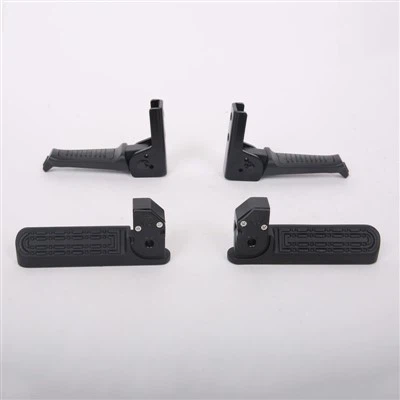
As a forging parts supplier, ensuring the quality of forging parts is not only a responsibility but also the foundation of our business. In this blog, I will share some key methods and practices that we use to guarantee the high - quality of forging parts.
1. Raw Material Selection
The quality of forging parts starts with the raw materials. We carefully select high - grade metals and alloys that meet the specific requirements of different forging applications. For example, when it comes to producing Aluminum Alloy Forgings, we source aluminum alloys with the right chemical composition and mechanical properties.
We have established long - term partnerships with reliable raw material suppliers. These suppliers are required to provide detailed material certificates, which include information such as chemical composition, tensile strength, and hardness. Before accepting a batch of raw materials, we conduct our own in - house inspections. This may involve chemical analysis using spectrometers to verify the elemental composition and mechanical testing to check the material's strength and ductility.
2. Advanced Forging Technology
Adopting advanced forging technologies is crucial for ensuring the quality of forging parts. We continuously invest in research and development to keep up with the latest industry trends. One of the technologies we use is Aluminum Alloy Liquid Forging. This process combines the advantages of casting and forging, resulting in parts with excellent mechanical properties and a fine - grained microstructure.
In addition to liquid forging, we also use traditional forging methods such as open - die forging and closed - die forging. Each method has its own advantages and is suitable for different types of parts. For complex - shaped parts, closed - die forging is often the preferred choice as it can produce parts with high dimensional accuracy and good surface finish.
We also pay great attention to the forging parameters, such as temperature, pressure, and deformation rate. These parameters need to be precisely controlled during the forging process. For example, the forging temperature has a significant impact on the material's plasticity and the formation of the microstructure. If the temperature is too high, the material may over - heat and lose its mechanical properties. On the other hand, if the temperature is too low, the material may not deform properly, leading to defects such as cracks and incomplete filling.
3. Strict Quality Control during the Forging Process
Quality control is an ongoing process throughout the forging production. We have a well - established quality control system that includes multiple inspection points. At the beginning of the process, we inspect the raw materials as mentioned before. During the forging process, we use non - destructive testing methods such as ultrasonic testing and magnetic particle testing to detect internal and surface defects in the parts.
Ultrasonic testing is used to detect internal flaws such as cracks, porosity, and inclusions. By sending ultrasonic waves into the forging part, any defects will cause the waves to reflect differently, which can be detected by the testing equipment. Magnetic particle testing is mainly used for detecting surface and near - surface defects in ferromagnetic materials. It works by applying a magnetic field to the part and then spreading magnetic particles on the surface. If there are any defects, the magnetic particles will accumulate at the defect sites, making them visible.
In addition to non - destructive testing, we also conduct dimensional inspections using precision measuring tools such as calipers, micrometers, and coordinate measuring machines (CMMs). These tools ensure that the forging parts meet the required dimensional tolerances. Any parts that do not meet the quality standards are immediately rejected and recycled or re - worked if possible.
4. Heat Treatment
Heat treatment is an important step in improving the mechanical properties of forging parts. After forging, the parts often have a non - uniform microstructure and may have residual stresses. Heat treatment can help to refine the grain structure, improve the hardness, strength, and toughness of the parts, and relieve the residual stresses.

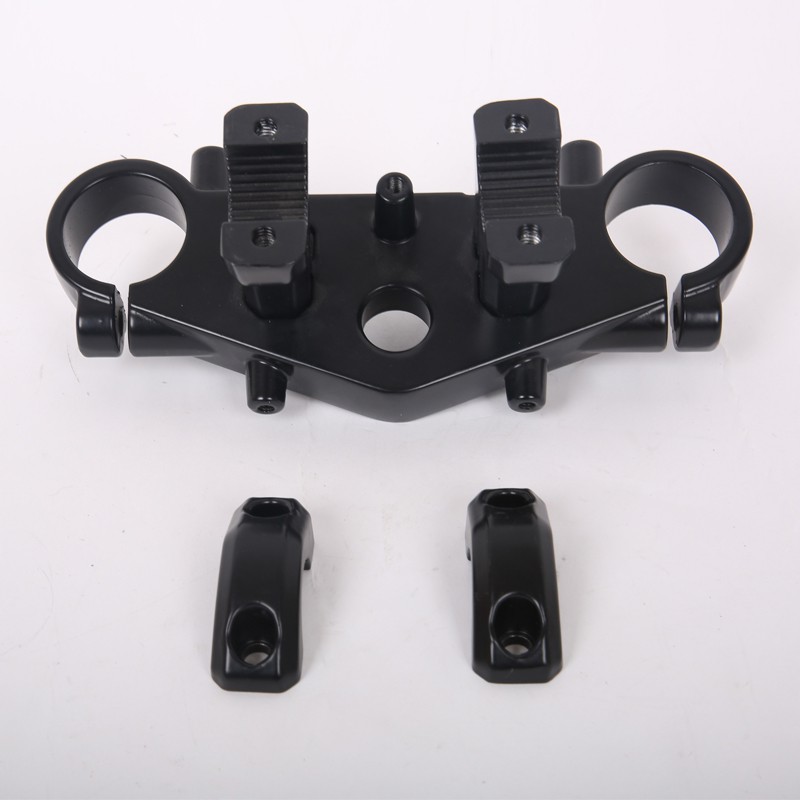
We offer a variety of heat treatment processes, including annealing, quenching, and tempering. Annealing is used to soften the material, improve its machinability, and relieve internal stresses. Quenching is a process of rapid cooling, which can increase the hardness of the material. However, quenching also generates high residual stresses, so tempering is usually carried out after quenching to reduce the brittleness and improve the toughness of the material.
The heat treatment process is carefully controlled, including the heating rate, holding time, and cooling rate. We use advanced heat treatment furnaces with precise temperature control systems to ensure that the parts are heated and cooled at the correct rates. After heat treatment, we conduct mechanical property testing to verify the effectiveness of the heat treatment process.
5. Surface Treatment
Surface treatment is another aspect that affects the quality and performance of forging parts. It can improve the corrosion resistance, wear resistance, and aesthetic appearance of the parts. We offer different surface treatment options such as painting, plating, and coating.
Painting is a common surface treatment method that can provide a protective layer on the surface of the forging part. It can prevent the part from being corroded by the environment. Plating, such as chrome plating or nickel plating, can improve the wear resistance and hardness of the surface. Coating, such as ceramic coating, can provide high - temperature resistance and anti - friction properties.
Before applying the surface treatment, we ensure that the surface of the forging part is clean and free of contaminants. We use various cleaning methods such as degreasing, sandblasting, and pickling to prepare the surface. After the surface treatment, we conduct adhesion testing and corrosion resistance testing to ensure the quality of the surface treatment.
6. Employee Training and Skill Development
Our employees are the key to ensuring the quality of forging parts. We provide regular training programs to enhance their skills and knowledge. The training includes theoretical knowledge about forging technology, quality control, and safety regulations, as well as practical training on operating the forging equipment.
We encourage our employees to participate in industry seminars and workshops to keep up with the latest trends and technologies. By continuously improving the skills of our employees, we can ensure that they can operate the equipment correctly, make accurate decisions during the production process, and detect and solve problems in a timely manner.
7. Continuous Improvement
In the forging industry, continuous improvement is essential. We regularly review our production processes, quality control methods, and customer feedback. Based on the review results, we identify areas for improvement and implement corresponding measures.
For example, if we find that a certain type of forging part has a high defect rate, we will analyze the root causes, which may include problems in the raw materials, forging process, or heat treatment. Then we will take corrective actions, such as changing the raw material supplier, adjusting the forging parameters, or optimizing the heat treatment process.
We also keep an eye on the latest technological developments in the industry and are willing to invest in new equipment and technologies to improve the quality and efficiency of our production.
Conclusion
Ensuring the quality of forging parts is a comprehensive process that involves raw material selection, advanced forging technology, strict quality control, heat treatment, surface treatment, employee training, and continuous improvement. As a forging parts supplier, we are committed to providing our customers with high - quality forging parts that meet their specific requirements.
If you are in the market for high - quality forging parts, we would be delighted to have a discussion with you. Whether you need standard forging parts or customized solutions, our team of experts can work closely with you to understand your needs and provide the best products. Please feel free to contact us for further information and to start a procurement negotiation.
References
- Metals Handbook: Forging. ASM International.
- Quality Control in Forging Industry. Journal of Forging Technology.
- Heat Treatment Principles and Practices. John Wiley & Sons.