Designing an aluminium die casting mold is a complex yet rewarding process. As an aluminium die casting mold supplier, I've had my fair share of experiences in this field. In this blog, I'll walk you through the ins and outs of designing these molds, sharing some tips and tricks I've picked up along the way.
Understanding the Basics of Aluminium Die Casting
Before we dive into the design process, it's crucial to understand what aluminium die casting is all about. Aluminium die casting is a manufacturing process where molten aluminium is forced into a mold cavity under high pressure. This process is widely used to produce complex and high - precision parts with excellent surface finish.
The advantages of using aluminium in die casting are numerous. Aluminium is lightweight, corrosion - resistant, and has good thermal and electrical conductivity. It can also be easily machined and finished, making it a popular choice in various industries such as automotive, aerospace, and consumer electronics.
Initial Planning and Requirements Gathering
The first step in designing an aluminium die casting mold is to gather all the necessary information from the client. You need to know the exact specifications of the part they want to produce, including its dimensions, tolerances, surface finish requirements, and quantity.
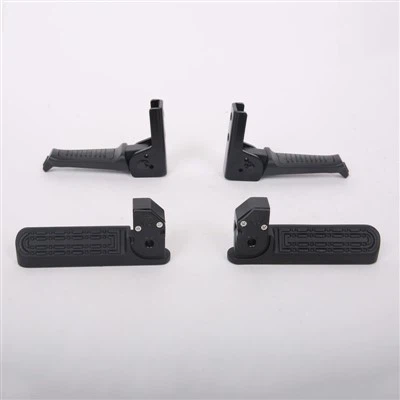
It's also important to understand the end - use of the part. For example, if it's a part for a motorcycle, it will need to meet certain strength and durability standards. You can check out our Motorcycle Parts Die Casting Mold page to see some of the molds we've designed for this specific application.
Once you have all the details, you can start creating a preliminary design concept. This concept will serve as a roadmap for the rest of the design process.
Material Selection for the Mold
The choice of material for the die casting mold is critical as it directly affects the mold's performance and lifespan. For aluminium die casting, tool steel is the most commonly used material. It has high strength, good heat resistance, and excellent wear resistance.
There are different grades of tool steel available, and the selection depends on factors such as the complexity of the part, the production volume, and the casting temperature. A higher - grade tool steel might be more expensive, but it can save you money in the long run by reducing the need for frequent mold repairs and replacements.
Designing the Mold Cavity
The mold cavity is the heart of the die casting mold. It's the space where the molten aluminium will be injected to form the part. When designing the mold cavity, you need to consider several factors:
- Part Geometry: The shape of the part will determine the complexity of the mold cavity. Complex parts may require additional features such as slides, cores, and lifters to facilitate the ejection of the part.
- Draft Angles: Draft angles are necessary to ensure that the part can be easily ejected from the mold. The recommended draft angle for aluminium die casting is usually between 1° and 3°.
- Wall Thickness: Uniform wall thickness is essential to prevent defects such as shrinkage and porosity. Try to keep the wall thickness as consistent as possible throughout the part.
Gate and Runner Design
The gate is the opening through which the molten aluminium enters the mold cavity, and the runner is the channel that connects the gate to the injection system. The design of the gate and runner is crucial for ensuring proper filling of the mold cavity.


- Gate Size and Location: The size and location of the gate can affect the flow of the molten aluminium. A well - designed gate should allow the aluminium to fill the cavity evenly without causing turbulence or air entrapment.
- Runner Shape and Dimensions: The runner should be designed to minimize pressure drop and heat loss. A circular or trapezoidal runner is often used for aluminium die casting.
Cooling System Design
During the die casting process, a large amount of heat is generated. If this heat is not removed efficiently, it can cause thermal stress in the mold, leading to premature wear and cracking. That's why a proper cooling system is essential.
The cooling system usually consists of cooling channels drilled into the mold. These channels are connected to a cooling water supply. The design of the cooling channels should ensure uniform cooling of the mold to prevent warping of the part.
Ejection System Design
Once the part is solidified, it needs to be ejected from the mold. The ejection system is responsible for this task. There are different types of ejection systems, such as ejector pins, ejector sleeves, and stripper plates.
The choice of ejection system depends on the shape and size of the part. For example, ejector pins are commonly used for simple parts, while stripper plates are more suitable for parts with a large surface area.
Simulation and Testing
Before manufacturing the actual mold, it's a good idea to use simulation software to analyze the die casting process. Simulation can help you identify potential problems such as air entrapment, shrinkage, and uneven filling. You can then make adjustments to the design based on the simulation results.
After the mold is manufactured, it's important to conduct testing. This involves running a few test casts to check the quality of the parts produced. If any defects are found, you can make further adjustments to the mold.
Quality Control and Maintenance
Quality control is an ongoing process in the die casting mold design and manufacturing. You need to inspect the mold at every stage of the process to ensure that it meets the required specifications.
Regular maintenance of the mold is also crucial to extend its lifespan. This includes cleaning, lubrication, and inspection for wear and damage.
Conclusion
Designing an aluminium die casting mold is a multi - step process that requires careful planning, attention to detail, and a good understanding of the die casting process. As an aluminium die casting mold supplier, we're committed to providing high - quality molds that meet our clients' needs.
If you're in the market for an Aluminum Alloy Die - casting Mold or an Aluminum High - pressure Die Casting Mold, don't hesitate to reach out to us. We'd be more than happy to discuss your project and provide you with a customized solution.
References
- Campbell, J. (2003). Castings. Butterworth - Heinemann.
- Flemings, M. C. (1974). Solidification Processing. McGraw - Hill.
- Kalpakjian, S., & Schmid, S. R. (2009). Manufacturing Engineering and Technology. Pearson Prentice Hall.