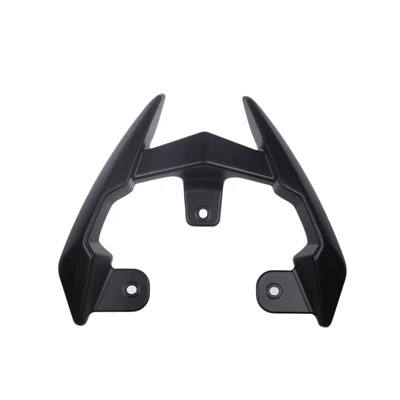
Can a motorcycle rear handrail be used on a trike motorcycle?
As a supplier of Motorcycle Rear Handrails, I often get asked this question. It's a valid one, considering the growing popularity of trike motorcycles and the desire for riders to enhance their comfort and safety. In this blog post, I'll delve into the topic and provide you with a comprehensive answer.
First, let's understand the basic differences between a regular motorcycle and a trike motorcycle. A traditional motorcycle has two wheels, while a trike motorcycle has three - two at the rear and one at the front. This difference in design has implications for the use of rear handrails.
One of the main factors to consider is the structural compatibility. Motorcycle rear handrails are typically designed for the specific frame and geometry of a two - wheeled motorcycle. The mounting points and the overall stress distribution on a regular motorcycle are different from those on a trike. Trikes have a wider and more stable rear end, and the forces acting on the vehicle during acceleration, braking, and cornering are distributed differently.
For example, when a motorcycle leans into a turn, the rear handrail may experience a certain amount of lateral force. On a trike, which doesn't lean in the same way, the lateral forces are much less significant. This means that a handrail designed for a motorcycle may not be able to withstand the unique stress patterns on a trike.
However, it's not entirely impossible to use a motorcycle rear handrail on a trike. Some handrails may be adaptable with the right modifications. If the handrail has adjustable mounting brackets, it might be possible to fit it to the trike's frame. But this requires careful measurement and potentially some custom - made parts.
Another aspect to consider is the functionality. On a regular motorcycle, rear handrails serve multiple purposes. They provide a grip for passengers, which helps them maintain balance during the ride. They can also be used as an anchor point for tying down luggage.


On a trike, the need for passenger grip may be less critical. Trikes are generally more stable, and passengers may feel more secure without having to hold on as tightly. However, the handrail can still be useful for luggage attachment. If you're planning to go on a long - distance trip on your trike, having a handrail to secure your bags can be a great advantage.
Now, let's talk about the types of rear handrails we offer as a supplier. We have a wide range of products, including the Aluminum Rear Armrest. Aluminum is a popular choice because it's lightweight yet strong. It can withstand the rigors of the road while adding a sleek look to your motorcycle or trike.
Our Motorcycle Rear Grab Handle is another option. It's designed to provide a firm grip for passengers, and it's made from high - quality materials to ensure durability.
If you have an electric scooter, we also offer Electric Scooter Armrest Shelves. These are perfect for adding a touch of comfort and functionality to your scooter.
When it comes to using a motorcycle rear handrail on a trike, safety should always be the top priority. If you're unsure whether a particular handrail will work on your trike, it's advisable to consult a professional mechanic. They can assess the compatibility and make any necessary adjustments to ensure a safe installation.
In terms of aesthetics, a well - chosen rear handrail can enhance the look of your trike. It can give it a more customized and stylish appearance. Whether you prefer a classic, chrome - finished handrail or a modern, black - powder - coated one, there are options available to suit your taste.
If you're considering using a motorcycle rear handrail on your trike, here are some steps you can take:
- Research the specific handrail you're interested in. Look for reviews from other riders who may have attempted a similar installation.
- Measure the mounting points on your trike. This will help you determine if the handrail can be directly mounted or if modifications are needed.
- Check the weight capacity of the handrail. Make sure it can support any additional weight, such as luggage or the force exerted by a passenger.
As a supplier, we're committed to providing high - quality rear handrails that meet the needs of our customers. Whether you're riding a motorcycle or a trike, we have the products to enhance your riding experience.
If you're interested in our products or have any questions about using a motorcycle rear handrail on a trike, we encourage you to reach out to us. We can provide you with more detailed information and assist you in finding the right handrail for your vehicle.
In conclusion, while there are challenges to using a motorcycle rear handrail on a trike, it's not an impossible feat. With the right approach, including careful consideration of compatibility, functionality, and safety, you may be able to use one successfully. And if you're in the market for a rear handrail, we're here to help you make the best choice.
References
- Motorcycle Design and Engineering Principles, 3rd Edition
- Trike Motorcycle Enthusiast Magazine, various issues