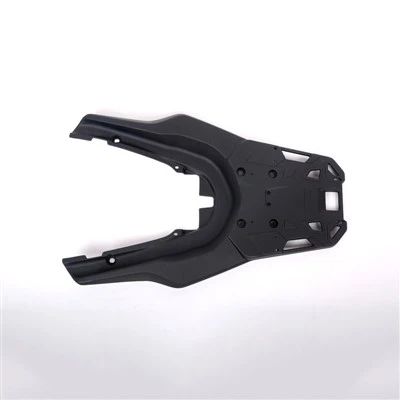
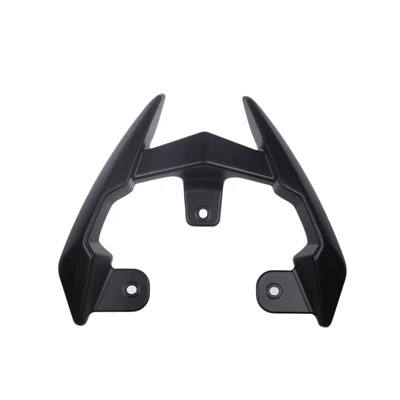
As a dedicated supplier of Aluminum Rear Armrests, I've delved deep into the various aspects of these products. One of the most frequently asked questions is about the shock absorption ability of an aluminum rear armrest. In this blog, I'll explore this topic in detail, shedding light on the science behind it and its real - world implications.
The Basics of Shock Absorption
Shock absorption is the process of dissipating and reducing the impact energy when an object is subjected to sudden forces. In the context of an aluminum rear armrest, this is crucial for enhancing the comfort and safety of the user. When a vehicle, such as a motorcycle or an electric scooter, encounters bumps, potholes, or sudden stops, the armrest needs to absorb and distribute the shock to prevent discomfort or injury to the passenger.
Aluminum as a Material for Shock Absorption
Aluminum is a popular choice for rear armrests due to its unique properties. First and foremost, it has a relatively low density, which means it is lightweight. This is beneficial for vehicles as it helps to reduce the overall weight, improving fuel efficiency and handling. But how does it fare in terms of shock absorption?


Aluminum has a certain degree of elasticity. When a force is applied to an aluminum rear armrest, the material deforms slightly. This deformation allows it to absorb some of the energy from the shock. Unlike more brittle materials, aluminum can return to its original shape after the force is removed, within a certain limit. This elastic behavior is key to its shock - absorbing capabilities.
Structural Design and Shock Absorption
The shock absorption ability of an aluminum rear armrest is not solely dependent on the material itself. The structural design plays a vital role. For example, some armrests are designed with a hollow structure. This design allows the armrest to compress and expand more easily when a shock is applied, increasing its ability to absorb energy.
Another important design aspect is the use of curved or angled shapes. These shapes can help to distribute the shock more evenly across the armrest. Instead of concentrating the force in one area, the curved or angled design spreads it out, reducing the stress on any single point. This not only improves shock absorption but also enhances the durability of the armrest.
Real - World Applications
Let's take a look at some real - world applications of aluminum rear armrests and their shock absorption abilities.
Motorcycle Aluminum Rear Grab Bar
On motorcycles, the Motorcycle Aluminum Rear Grab Bar serves as a crucial safety and comfort feature. When the motorcycle hits a bump or makes a sudden maneuver, the grab bar absorbs some of the shock, providing a more stable and comfortable grip for the passenger. The shock absorption helps to reduce the jolts and vibrations that the passenger feels, making the ride more enjoyable.
Electric Scooter Armrest Shelves
In the case of electric scooters, the Electric Scooter Armrest Shelves also play an important role. Electric scooters are often used on urban roads, which may have uneven surfaces. The armrest shelves absorb the shocks from the road, allowing the rider to maintain a more comfortable and stable position. This is especially important for longer rides, as it reduces fatigue and discomfort.
Motorcycle Rear Passenger Grab
The Motorcycle Rear Passenger Grab is another example. It provides a secure hold for the passenger and absorbs shocks during the ride. This is essential for passenger safety, as it helps to prevent the passenger from being thrown off the motorcycle due to sudden shocks or vibrations.
Testing the Shock Absorption Ability
To ensure the quality and performance of our aluminum rear armrests, we conduct a series of tests. One of the common tests is the impact test. In this test, a known force is applied to the armrest using a specialized testing machine. The deformation of the armrest is measured, and the amount of energy absorbed is calculated.
We also perform vibration tests. In these tests, the armrest is subjected to continuous vibrations similar to those experienced during normal vehicle use. By monitoring the response of the armrest to these vibrations, we can assess its ability to dampen the vibrations and provide a smooth ride.
Advantages of Our Aluminum Rear Armrests
As a supplier, we take pride in the quality of our aluminum rear armrests. Our products are designed with the latest engineering techniques to maximize shock absorption. We use high - grade aluminum materials that have excellent elasticity and durability.
Our manufacturing process ensures that each armrest is produced to strict quality standards. We pay close attention to the structural design, using advanced computer - aided design (CAD) software to optimize the shape and dimensions of the armrests. This results in armrests that offer superior shock absorption compared to many of our competitors.
Conclusion
In conclusion, the shock absorption ability of an aluminum rear armrest is a combination of the material properties and the structural design. Aluminum's elasticity allows it to absorb some of the shock energy, while the right structural design can enhance this ability significantly. Whether it's a Motorcycle Aluminum Rear Grab Bar, Electric Scooter Armrest Shelves, or Motorcycle Rear Passenger Grab, our aluminum rear armrests are designed to provide a comfortable and safe experience for users.
If you're interested in purchasing high - quality aluminum rear armrests with excellent shock absorption capabilities, we invite you to contact us for procurement and negotiation. We're committed to providing the best products and services to meet your needs.
References
- "Materials Science and Engineering: An Introduction" by William D. Callister Jr. and David G. Rethwisch
- "Automotive Engineering Fundamentals" by Thomas D. Gillespie